Usando o Mentimeter em cada nível da Taxonomia de Bloom
Vidhi integra o Mentimeter ao longo de seus cursos de gestão de projetos para se alinhar diretamente aos seis níveis de aprendizagem de Bloom. Não se trata apenas de verificar o conhecimento — cada atividade do Menti é intencionalmente elaborada para trabalhar um tipo específico de habilidade cognitiva, da simples memorização à criação complexa. Veja como ele dá vida a cada nível:
1. Lembrar
Essa é a base em que os alunos lembram fatos básicos, definições e conceitos centrais. Vidhi usa perguntas simples de múltipla escolha no Mentimeter para testar o conhecimento básico, por exemplo: "Quais são os três componentes do Triângulo de Ferro na gestão de projetos?"
Essas enquetes rápidas ajudam os alunos a fixar ideias e terminologias essenciais, e dão a Vidhi uma visão instantânea de se a turma está acompanhando o conhecimento básico.
2. Entender
Nesse nível, trata-se de interpretar significados e compreender conceitos. Vidhi usa perguntas de múltipla escolha baseadas em cenários realistas de projetos, pedindo aos alunos que identifiquem a abordagem correta. Essas perguntas colocam os alunos no papel de um gerente de projetos, ajudando-os a conectar teoria e prática e a desenvolver habilidades relevantes para a carreira.
"Você é gerente de projetos em uma organização que usa ciclos de sprint de duas a quatro semanas. Isso é um exemplo de qual tipo de abordagem de projeto?"
Opções como Ágil, Tradicional, Kanban ou Scrum levam os alunos a traduzir o que aprenderam em reconhecimento aplicado. Essas perguntas baseadas em cenários testam se os alunos conseguem ir além da memorização e interpretar corretamente aplicações do mundo real. Os alunos de Vidhi dizem que esses exercícios são especialmente valiosos ao praticar o papel de gerente de projetos, pois os ajudam a ganhar confiança na compreensão e aplicação de conceitos centrais.
3. Aplicar
Agora se trata de usar o conhecimento em novos contextos. Vidhi elabora perguntas baseadas em cálculos que espelham o que os alunos encontrariam no trabalho. Por exemplo, ele dá a eles uma fórmula para avaliar o retorno sobre o investimento de um projeto, junto com um novo cenário e conjunto de dados.
"Com base nesses dados financeiros, como gerente de projetos, você investiria neste projeto? Calcule o período de retorno e o retorno sobre o investimento e decida."
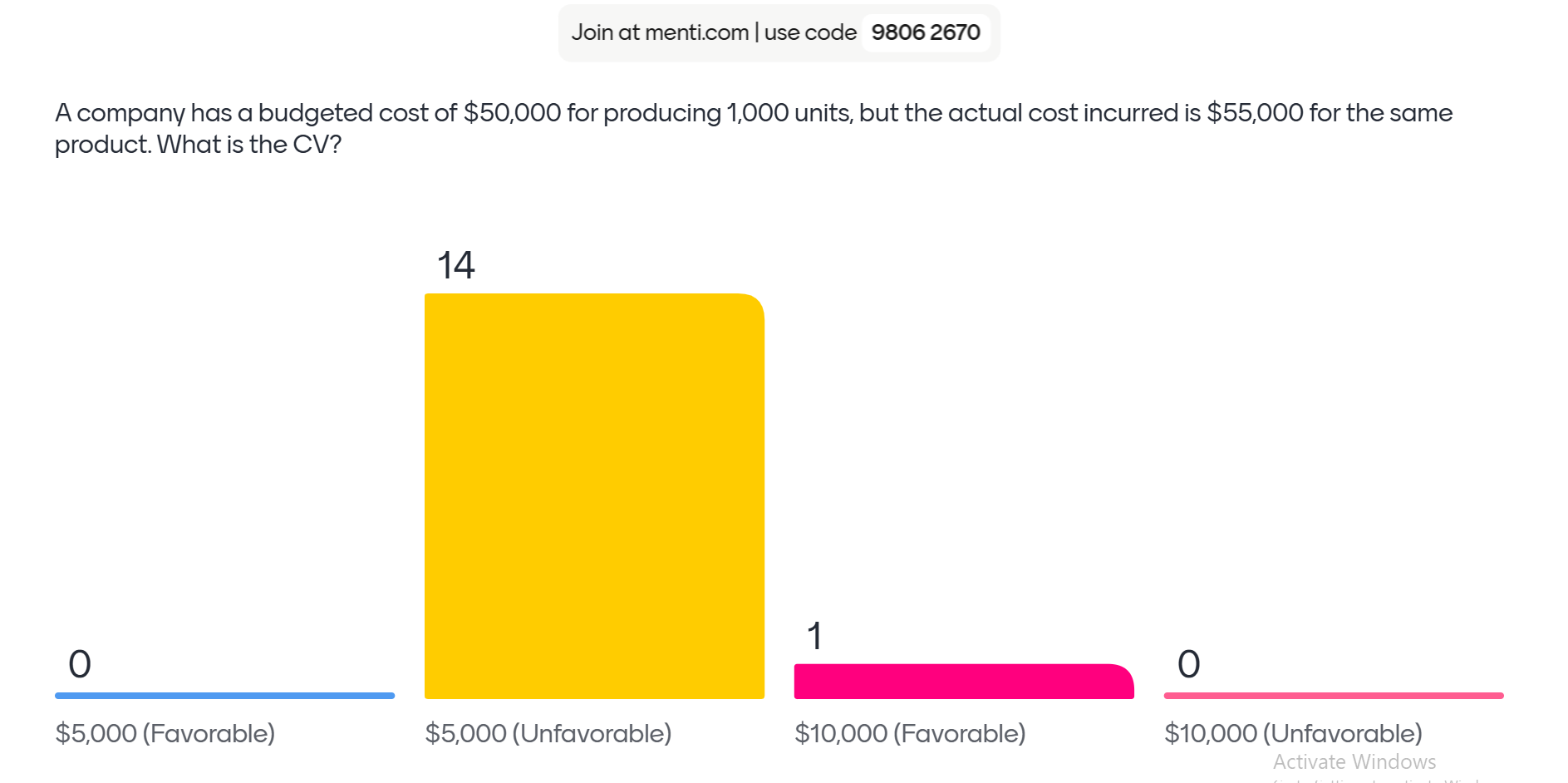
Os alunos precisam aplicar métodos conhecidos a novos problemas e inserir respostas no Mentimeter para escolher o caminho de decisão correto. Aqui está um exemplo de uma questão de cálculo de variação de custo que Vidhi já usou em uma de suas aulas:
4. Analisar
Vidhi aumenta a complexidade pedindo aos alunos que decomponham e avaliem dilemas de projetos multifacetados para lidar com riscos do projeto.
"Seu projeto está acima do orçamento e atrasado. Seu fornecedor acabou de informar que haverá atraso. O que você faz?"
O Mentimeter oferece opções de múltipla escolha como:
Encontrar um novo fornecedor
Solicitar financiamento de contingência adicional
Atualizar as partes interessadas
Uma combinação das opções acima
Espera-se que os alunos pesem os prós e contras, conectem diferentes informações e façam um julgamento. Vidhi usa essas perguntas para ver se os alunos conseguem analisar um cenário, não apenas reagir a ele. Os alunos consideram esse tipo de pergunta valioso, pois lhes dá confiança para dar os próximos passos importantes como gerente de projetos na resolução de riscos do projeto.
5. Avaliar
Nesse nível, espera-se que os alunos justifiquem decisões, avaliem alternativas e sustentem seu raciocínio com evidências. Para desenvolver essas habilidades, Vidhi incorpora ferramentas como o Project Libre, em que os alunos criam estruturas analíticas de projeto e analisam dados do projeto para embasar suas recomendações.
Ele também usa cenários de dramatização para explorar dilemas do mundo real, como gerenciar riscos de projeto e recolocar um projeto atrasado nos trilhos. Esses exercícios são combinados com enquetes do Mentimeter e perguntas de reflexão como: "Quais ferramentas ajudam um gerente de projetos a avaliar e reduzir riscos regularmente?" Os alunos discutem ativamente respostas como matrizes de avaliação de risco ou painéis de risco ao vivo, dando vida a conceitos abstratos por meio da aprendizagem entre pares e do pensamento aplicado.
Ao combinar ferramentas interativas com situações realistas, Vidhi ajuda os alunos a avaliar desafios complexos de projetos de uma forma prática e relevante, preparando-os para tomar decisões confiantes e baseadas em evidências em suas futuras carreiras.
6. Criar
No topo da pirâmide de Bloom, os alunos são desafiados a construir algo novo. Em projetos em grupo, eles usam o software de gestão de projetos Project Libre para elaborar documentos-chave do projeto, como termos de abertura, estruturas analíticas de projeto, matrizes RACI, avaliações de risco, planos de contingência e comunicações empresariais.
Exemplos incluem escrever cartas comerciais para as partes interessadas descrevendo riscos, solicitar financiamento adicional a patrocinadores ou desenvolver planos de projeto completos em conjunto. O Mentimeter apoia essas atividades com nuvens de palavras reflexivas e debriefings. Após os exercícios de dramatização, Vidhi costuma propor aos alunos uma pergunta como: "Qual foi seu maior aprendizado com este exercício?", incentivando-os a compartilhar percepções em uma ou duas palavras.
A turma então vê uma nuvem de palavras com as conclusões, construindo um entendimento compartilhado e reforçando o valor da aprendizagem entre pares.
Autoestudo com o Mentimeter
O que Vidhi mais valoriza no Mentimeter é a versatilidade — não é só para sessões ao vivo, mas também uma ótima ferramenta para autoestudo.
"Já tive alunos que me contaram que juntam todos os slides do Mentimeter e os transformam em uma apresentação do PowerPoint para se testarem, às vezes até no trajeto para a faculdade", diz Vidhi. "Eles tentam responder às perguntas sem olhar as respostas antes, como forma de estudar para as provas. Uma aluna chegou a criar uma apresentação completa com todos os slides do Mentimeter e a compartilhou com a turma como ferramenta de estudo para a prova final. Isso ajudou muito a todos, e essa aluna acabou se saindo muito bem no curso."
Esse tipo de protagonismo no aprendizado é exatamente o que Vidhi busca!
Dicas para outros educadores
Vidhi tem algumas dicas práticas para instrutores que querem começar com Bloom e o Mentimeter:
Comece pelos seus objetivos de aprendizagem.
Elabore suas perguntas do Mentimeter de trás para frente, a partir do que você quer que os alunos alcancem.
Varie o formato.
Use múltipla escolha, nuvens de palavras, verdadeiro/falso — o que melhor se encaixar no nível que você está trabalhando.
Planeje com antecedência.
"Tento incluir de duas a três perguntas por conceito", ele diz. "Leva tempo para escrever as perguntas, mas vale a pena quando você vê os alunos realmente aprenderem bem os conceitos por meio das perguntas do Mentimeter."
Torne divertido.
Adicione um elemento gamificado e competitivo para aumentar o engajamento. Por exemplo, ofereça pequenos incentivos, como pontos extras de participação ou um prêmio para quem responder corretamente mais rápido.
Ouça seus alunos.
O Mentimeter dá aos alunos a chance de refletir e oferece aos instrutores insights em tempo real sobre o nível de conhecimento da turma.
Um aprendizado que permanece
Para Vidhi, o Mentimeter é mais do que uma ferramenta de sala de aula — é uma forma de dar vida aos objetivos de aprendizagem e manter os alunos ativamente engajados. "Isso realmente os ajuda a absorver o conhecimento", ele diz. Seja lembrando conceitos-chave ou aplicando fórmulas complexas, ele vê o impacto quando os alunos lhe enviam e-mails depois da aula para dizer o quanto gostaram da sessão e como isso os ajudou a assumir o controle de seu aprendizado.
No fim das contas, Vidhi acredita que esse tipo de aprendizagem interativa traz benefícios de longo prazo. "No fim do dia, queremos ter um impacto positivo em nossos alunos. Eles vão levar seu conhecimento e suas habilidades para suas carreiras e ter um impacto positivo nas organizações em que trabalham dentro da comunidade. Por isso, queremos garantir que centralizamos nosso ensino em aprendizagem baseada em ação, preparação para a carreira e integração de tecnologia com o Mentimeter e o software de gestão de projetos Project Libre."