
Empowering language learning with formative assessments and Mentimeter

For Carla el Khoury, teaching Arabic at the University of Oslo is all about empowering students to take charge of their learning. By blending traditional pedagogy with tools like Mentimeter, Carla transforms her classroom into an interactive space where students feel confident experimenting with new language skills, without fear of making mistakes.
At the University of Oslo, many language courses follow a backward design model. Instructors start with clear learning objectives for the end of the semester, then design assessments - both summative and formative - to track student progress. Lessons and activities are carefully planned to help students reach those objectives.
Carla’s flipped classroom methodology puts students in the driver’s seat. Instead of using class time to introduce new material, students engage with content like vocabulary and grammar at home. When they arrive in class, the focus shifts to applying what they’ve learned through activities designed to identify and address gaps in understanding.
Carla explains, "My role is more of a facilitator. I focus on spotting gaps in understanding and helping students activate the knowledge they gained at home."
To make this process smoother, Carla uses Mentimeter. Throughout the semester, she uses diagnostic formative assessments, giving her insight into her students' knowledge levels.
"Mentimeter helps me know exactly where my students are struggling, so I can tailor classroom activities to their needs. I maximize class time by focusing on the areas that need the most attention." - Carla el Khoury, Arabic Instructor at University of Oslo
Carla explains that anonymous participation in Mentimeter is crucial for language learning because it encourages students to practice writing and building sentences without the fear of being judged. "Language learners are vulnerable. They don’t want to make mistakes," Carla says. With anonymity, students can freely contribute, knowing they won’t be called out for errors.
Carla uses the open ended slide to gather the sentences the students have created, which are then discussed collectively in class. This approach not only helps students learn from each other’s mistakes but also fosters a sense of community.
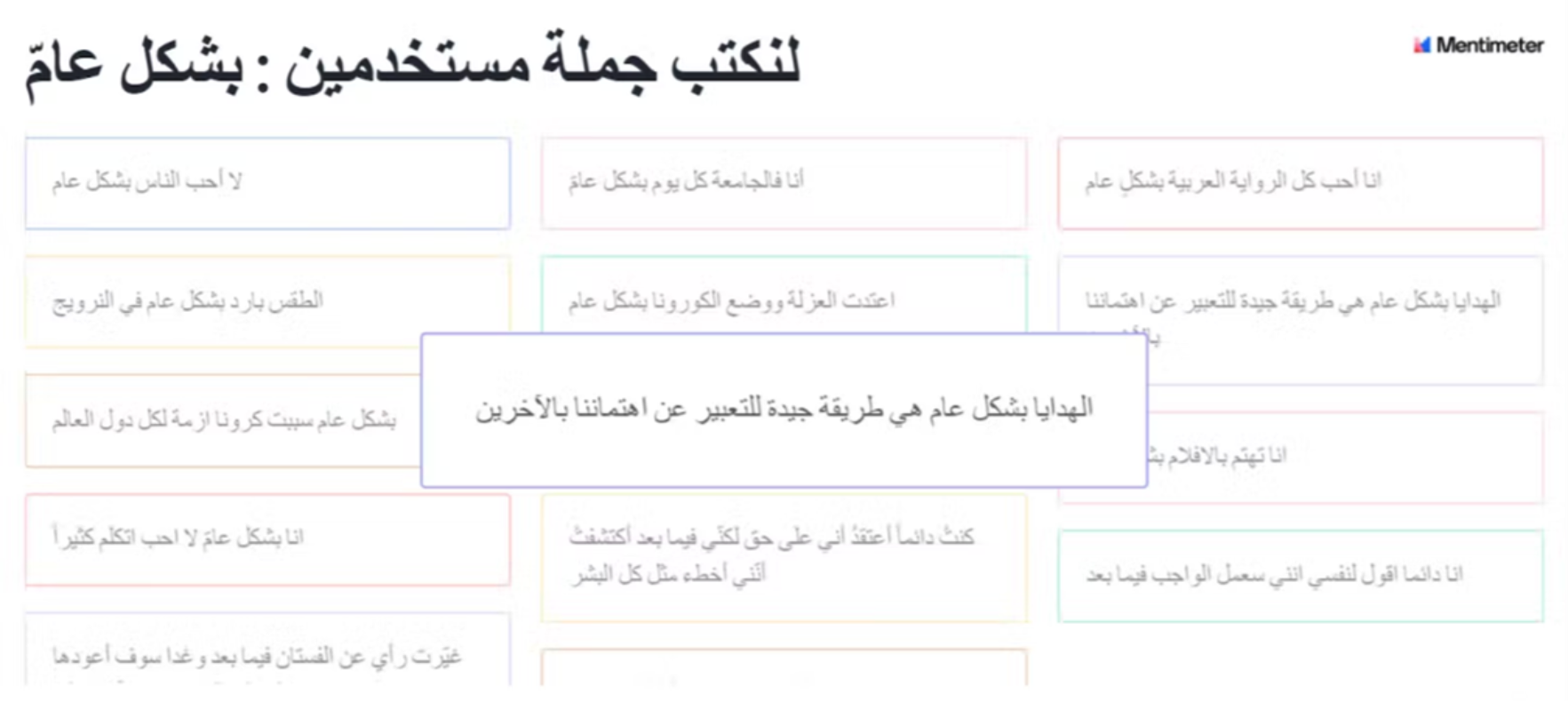
Open ended slide with the question “Let's write a sentence using the expression 'in general'” in Arabic and populated answers.
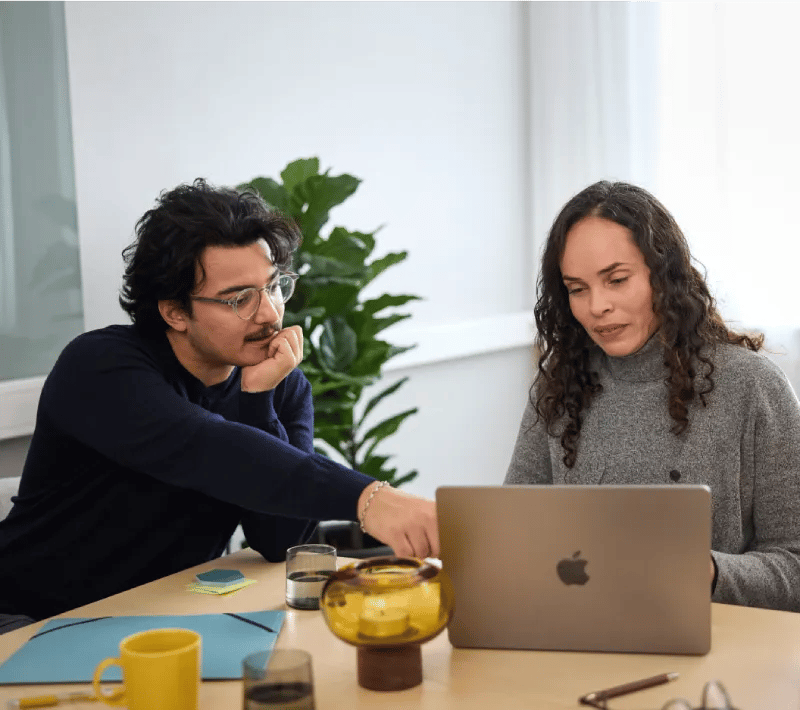
Language learners are vulnerable. They don’t want to make mistakes
Carla’s innovation doesn’t stop in the classroom. This semester, she’s testing a new way of using Mentimeter for homework assignments. Instead of traditional written homework, students submit their answers directly on Mentimeter before class.
"Receiving homework submissions in Mentimeter gives me a chance to review students’ work in advance and identify trends or common errors before we even meet. It’s a great way to prepare for the seminar and maximize our time together." - Carla el Khoury, Arabic Instructor at University of Oslo
Her students, many of whom are shy or hesitant in their language skills, have responded positively to this. They appreciate the opportunity to practice without the pressure of a formal evaluation, and Carla is able to provide real-time feedback that addresses specific issues before they become bigger problems.
Carla believes that the way students learn and are assessed in language education has evolved, especially with the rise of AI. Traditionally, language teachers focused on the final outcome - whether students could hold a conversation or write a piece of text. Now, the emphasis has shifted to the learning process itself.
"It's not just about the end result anymore, it's about understanding how students approach learning a language. Mentimeter really helps with that. It gives me real-time insights into how my students are thinking and working through concepts, so I can see exactly how they’re engaging and applying what they've learned." - Carla el Khoury, Arabic Instructor at University of Oslo
The Faculty of Humanities at the University of Oslo places a strong emphasis on digitalization and fostering learning communities. Carla shares that tools like Mentimeter help her contribute to this vision by building collaborative, inclusive spaces for her students.
"Mentimeter fits so well with the university’s strategy. It helps create a sense of community among the students and makes the learning process much more interactive." - Carla el Khoury, Arabic Instructor at University of Oslo
Carla’s innovative use of EdTech tools has made a lasting impact on her students. In an end-of-semester survey, they praised her use of Mentimeter for creating an inclusive environment where they can practice without pressure.
In the end, Carla believes that the key to language learning success is confidence. By using formative assessment and engagement tools like Mentimeter, she helps students gain that confidence. As Carla puts it, "It’s not just about getting the right answer. It’s about learning how to think in a new language and having the courage to try."