
Cómo una universidad técnica fomenta la inclusión y mejora el aprendizaje

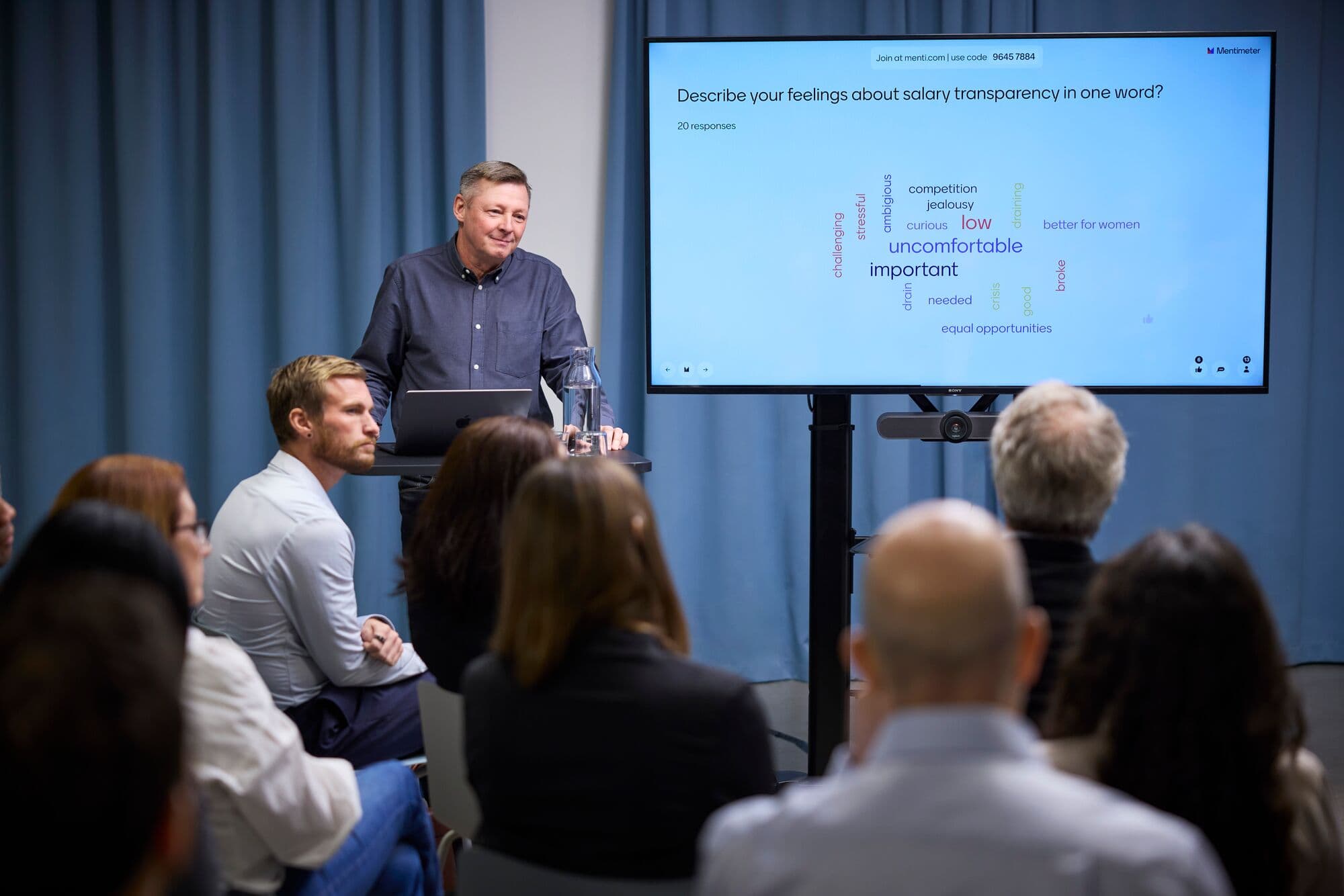
El umbral de uso de Mentimeter es bajo, lo que facilita su integración en la enseñanza.
La universidad usa un proceso estandarizado para recoger feedback de los estudiantes al final de cada curso (mediante otra herramienta). Aunque es útil, esto solo puede mejorar la siguiente edición del curso. Por eso, muchos docentes usan Mentimeter como herramienta complementaria para recoger feedback durante el curso, por ejemplo, después de los exámenes. De esta forma, el curso puede mejorarse de inmediato, en beneficio del grupo actual. Estas encuestas suelen tener tasas de respuesta más altas y comentarios más detallados que los cuestionarios de fin de curso.
«El feedback inmediato ayuda a mejorar la enseñanza durante el semestre, en lugar de después». - Reinhard Grabler, asistente universitario en el Departamento de Ciencia del Trabajo y Organización
«Empiezo cada clase con un cuestionario sobre el material de la semana anterior», dice la Senior Scientist de la universidad. «A los estudiantes les gusta mucho, y así se puede repasar fácilmente el contenido importante».
Otra forma de mejorar el aprendizaje con Mentimeter es mediante las preguntas de instrucción entre pares. Reinhard explica: «Proyecto una pregunta, y cada estudiante debe elegir entre cuatro posibles respuestas. Luego muestro los resultados, y se dividen en grupos, donde debaten por qué eligieron su respuesta. Después del debate, votan de nuevo, y con la segmentación, ahora podemos ver cuántas personas cambiaron su respuesta. Después de eso, explico la respuesta correcta».
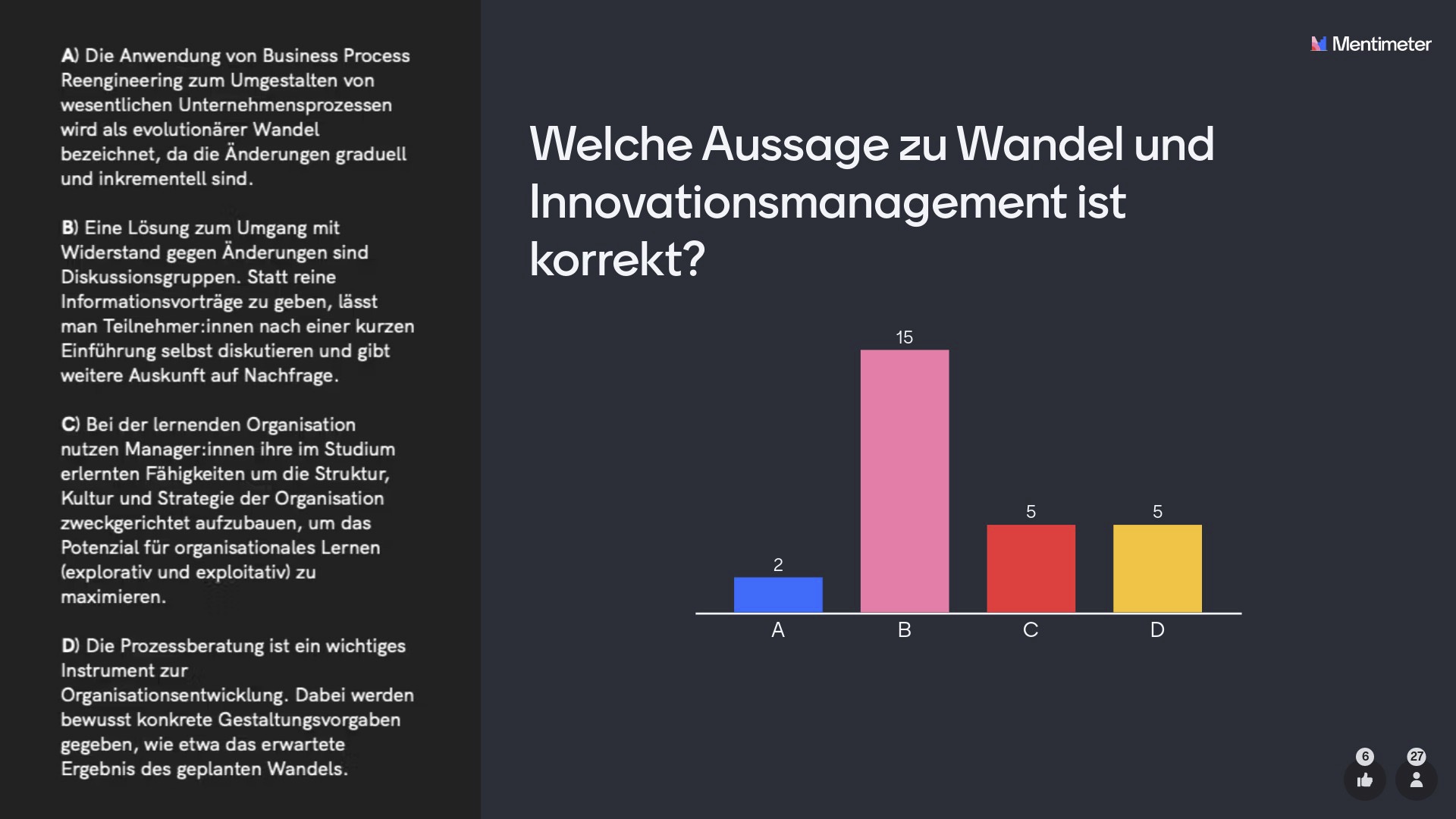
Respuestas de los estudiantes a la pregunta «¿Qué afirmación sobre la gestión del cambio y la innovación es correcta?» antes del debate entre compañeros.
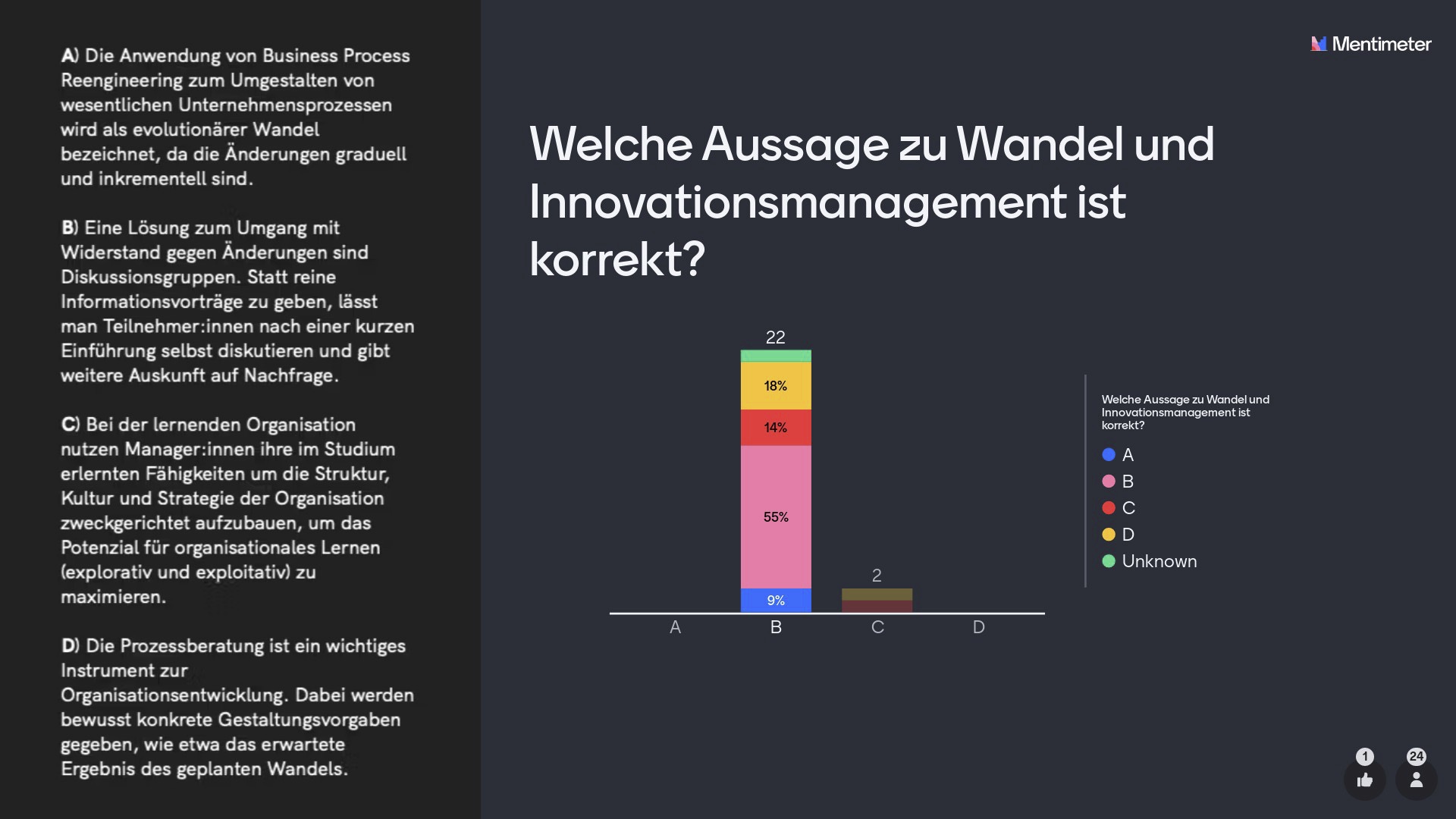
Respuestas de los estudiantes a la pregunta «¿Qué afirmación sobre la gestión del cambio y la innovación es correcta?» después del debate entre compañeros, usando la función de segmentación para mostrar qué respuesta habían enviado los estudiantes antes de debatir entre ellos.
El departamento de TI de la universidad conectó Mentimeter al entorno de TI a través de Azure Cloud con Azure SCIM. Existe una «tienda» interna de herramientas de TI donde los docentes pueden añadir Mentimeter a su caja de herramientas, y queda disponible en una hora. Así, Mentimeter pasó a formar parte del ecosistema de software de la universidad.
Kurt Matyas, exvicerrector de Asuntos Académicos, dice: «Inspirar a los estudiantes es esencial para mí. Buenas herramientas, como Mentimeter, me apoyan como docente. Mentimeter fue una gran decisión porque funciona bien y podemos confiar en ella. Recibimos buen feedback de los docentes, y ha sido probada técnicamente».
TU Wien es la universidad más grande de Austria en el campo de la tecnología y las ciencias naturales. Cuenta con unos 26.000 estudiantes y 4.000 miembros del personal docente e investigador. La historia de la universidad se remonta a más de 200 años, y representa un enfoque moderno, abierto y orientado a la práctica.
La universidad empezó a usar Mentimeter para aumentar la participación de los estudiantes, tanto a distancia como en el campus. Pronto descubrió que la herramienta lograba esto y mucho más:
Fomenta la inclusión
Hace que el aprendizaje sea divertido e interactivo
Ofrece feedback inmediato para mejorar
Y ayuda a los estudiantes a aprender mejor
Sigue leyendo para descubrir cómo TU Wien logró estos resultados con Mentimeter.
TU Wien busca que el aprendizaje sea atractivo e interactivo. Esto se aplica tanto a las clases presenciales como a distancia. Por eso, la universidad pidió a su departamento de e-learning que investigara herramientas para recoger las respuestas de los estudiantes. El equipo probó varias soluciones y descubrió que algunas herramientas y complementos gratuitos no eran fáciles de usar ni compatibles con móviles. Tras una evaluación cuidadosa, eligieron Mentimeter.
«Mentimeter cubre muchas funciones [que] antes teníamos que ofrecer con tres programas distintos».
- Kurt Matyas, exvicerrector de Asuntos Académicos
Mentimeter ayuda a TU Wien a fomentar la inclusión. Los profesores usan la herramienta durante las clases y las mesas redondas, invitando a los estudiantes a publicar sus preguntas o respuestas de forma anónima. «Esto funciona muy bien», dice Kurt Matyas, exvicerrector de Asuntos Académicos. «La diversidad es muy importante para mí y para TU Wien, y esto nos ayuda a asegurarnos de que todos se sientan bienvenidos».
«Usamos Mentimeter por primera vez en una mesa redonda durante la pandemia», explica Kurt. «Estábamos poniendo en marcha un programa de apoyo psicológico para estudiantes. Durante el evento, los estudiantes podían publicar preguntas de forma anónima y votarlas, lo que ayudó a gestionar el debate. Esta interactividad también es útil en las clases».
Gracias a Mentimeter, las personas pueden participar, ya sea que sigan una clase a distancia o presencialmente.
«Mentimeter incluye todas las funciones que necesitamos y se adapta bien a cursos de hasta 500 personas. La licencia de campus con participantes ilimitados es muy convincente».
- Kurt Matyas, exvicerrector de Asuntos Académicos
TU Wien es conocida por su enfoque práctico del aprendizaje. Mentimeter ayuda a que las clases y seminarios sean atractivos e interactivos. «Funciona genial como rompehielos», dice Reinhard Grabler, asistente universitario en el Departamento de Ciencia del Trabajo y Organización. Suele empezar las clases con una encuesta sencilla sobre el campo de estudio o el país de origen de los estudiantes.
Mentimeter también permite a los estudiantes participar activamente con el material del curso. Por ejemplo, el tipo de diapositiva de pregunta abierta les permite hacer preguntas que quizás no se hubieran atrevido a hacer delante de los demás estudiantes. Y la función de cuestionario sirve como una forma divertida de repasar el contenido de la clase. «Mentimeter tiene un umbral de entrada bajo, lo que ayuda a integrarlo bien en la docencia», dice Reinhard.
Una Senior Scientist de la universidad añade: «Mentimeter ayuda a aportar variedad a la clase, lo que la hace más animada para todos (estudiantes y docentes)».
TU Wien es la universidad más grande de Austria en el campo de la tecnología y las ciencias naturales. Cuenta con unos 26.000 estudiantes y 4.000 miembros del personal docente e investigador. La historia de la universidad se remonta a más de 200 años, y representa un enfoque moderno, abierto y orientado a la práctica.
La universidad empezó a usar Mentimeter para aumentar la participación de los estudiantes, tanto a distancia como en el campus. Pronto descubrió que la herramienta lograba esto y mucho más:
Fomenta la inclusión
Hace que el aprendizaje sea divertido e interactivo
Ofrece feedback inmediato para mejorar
Y ayuda a los estudiantes a aprender mejor
Sigue leyendo para descubrir cómo TU Wien logró estos resultados con Mentimeter.
TU Wien busca que el aprendizaje sea atractivo e interactivo. Esto se aplica tanto a las clases presenciales como a distancia. Por eso, la universidad pidió a su departamento de e-learning que investigara herramientas para recoger las respuestas de los estudiantes. El equipo probó varias soluciones y descubrió que algunas herramientas y complementos gratuitos no eran fáciles de usar ni compatibles con móviles. Tras una evaluación cuidadosa, eligieron Mentimeter.
«Mentimeter cubre muchas funciones [que] antes teníamos que ofrecer con tres programas distintos».
- Kurt Matyas, exvicerrector de Asuntos Académicos
Mentimeter ayuda a TU Wien a fomentar la inclusión. Los profesores usan la herramienta durante las clases y las mesas redondas, invitando a los estudiantes a publicar sus preguntas o respuestas de forma anónima. «Esto funciona muy bien», dice Kurt Matyas, exvicerrector de Asuntos Académicos. «La diversidad es muy importante para mí y para TU Wien, y esto nos ayuda a asegurarnos de que todos se sientan bienvenidos».
«Usamos Mentimeter por primera vez en una mesa redonda durante la pandemia», explica Kurt. «Estábamos poniendo en marcha un programa de apoyo psicológico para estudiantes. Durante el evento, los estudiantes podían publicar preguntas de forma anónima y votarlas, lo que ayudó a gestionar el debate. Esta interactividad también es útil en las clases».
Gracias a Mentimeter, las personas pueden participar, ya sea que sigan una clase a distancia o presencialmente.
«Mentimeter incluye todas las funciones que necesitamos y se adapta bien a cursos de hasta 500 personas. La licencia de campus con participantes ilimitados es muy convincente».
- Kurt Matyas, exvicerrector de Asuntos Académicos
TU Wien es conocida por su enfoque práctico del aprendizaje. Mentimeter ayuda a que las clases y seminarios sean atractivos e interactivos. «Funciona genial como rompehielos», dice Reinhard Grabler, asistente universitario en el Departamento de Ciencia del Trabajo y Organización. Suele empezar las clases con una encuesta sencilla sobre el campo de estudio o el país de origen de los estudiantes.
Mentimeter también permite a los estudiantes participar activamente con el material del curso. Por ejemplo, el tipo de diapositiva de pregunta abierta les permite hacer preguntas que quizás no se hubieran atrevido a hacer delante de los demás estudiantes. Y la función de cuestionario sirve como una forma divertida de repasar el contenido de la clase. «Mentimeter tiene un umbral de entrada bajo, lo que ayuda a integrarlo bien en la docencia», dice Reinhard.
Una Senior Scientist de la universidad añade: «Mentimeter ayuda a aportar variedad a la clase, lo que la hace más animada para todos (estudiantes y docentes)».
El umbral de uso de Mentimeter es bajo, lo que facilita su integración en la enseñanza.
La universidad usa un proceso estandarizado para recoger feedback de los estudiantes al final de cada curso (mediante otra herramienta). Aunque es útil, esto solo puede mejorar la siguiente edición del curso. Por eso, muchos docentes usan Mentimeter como herramienta complementaria para recoger feedback durante el curso, por ejemplo, después de los exámenes. De esta forma, el curso puede mejorarse de inmediato, en beneficio del grupo actual. Estas encuestas suelen tener tasas de respuesta más altas y comentarios más detallados que los cuestionarios de fin de curso.
«El feedback inmediato ayuda a mejorar la enseñanza durante el semestre, en lugar de después». - Reinhard Grabler, asistente universitario en el Departamento de Ciencia del Trabajo y Organización
«Empiezo cada clase con un cuestionario sobre el material de la semana anterior», dice la Senior Scientist de la universidad. «A los estudiantes les gusta mucho, y así se puede repasar fácilmente el contenido importante».
Otra forma de mejorar el aprendizaje con Mentimeter es mediante las preguntas de instrucción entre pares. Reinhard explica: «Proyecto una pregunta, y cada estudiante debe elegir entre cuatro posibles respuestas. Luego muestro los resultados, y se dividen en grupos, donde debaten por qué eligieron su respuesta. Después del debate, votan de nuevo, y con la segmentación, ahora podemos ver cuántas personas cambiaron su respuesta. Después de eso, explico la respuesta correcta».
Respuestas de los estudiantes a la pregunta «¿Qué afirmación sobre la gestión del cambio y la innovación es correcta?» antes del debate entre compañeros.
Respuestas de los estudiantes a la pregunta «¿Qué afirmación sobre la gestión del cambio y la innovación es correcta?» después del debate entre compañeros, usando la función de segmentación para mostrar qué respuesta habían enviado los estudiantes antes de debatir entre ellos.
El departamento de TI de la universidad conectó Mentimeter al entorno de TI a través de Azure Cloud con Azure SCIM. Existe una «tienda» interna de herramientas de TI donde los docentes pueden añadir Mentimeter a su caja de herramientas, y queda disponible en una hora. Así, Mentimeter pasó a formar parte del ecosistema de software de la universidad.
Kurt Matyas, exvicerrector de Asuntos Académicos, dice: «Inspirar a los estudiantes es esencial para mí. Buenas herramientas, como Mentimeter, me apoyan como docente. Mentimeter fue una gran decisión porque funciona bien y podemos confiar en ella. Recibimos buen feedback de los docentes, y ha sido probada técnicamente».