
Ensinando os alunos a pensar de forma crítica e criativa
Saindo da aula expositiva tradicional para um modelo dinâmico e centrado no aluno, impulsionado pela sala de aula invertida e pela interação entre colegas.

Comece pequeno. Não precisa reformular tudo. Basta transformar uma aula em uma atividade em grupo.
Comece pequeno. Não precisa reformular tudo. Basta transformar uma aula em uma atividade em grupo.
Georgia também usa o que chama de perguntas "você é" — estímulos baseados em cenários que pedem aos alunos que assumam papéis do mundo real e apliquem seu conhecimento em contexto. Essas perguntas começam com uma situação, exemplificada abaixo.
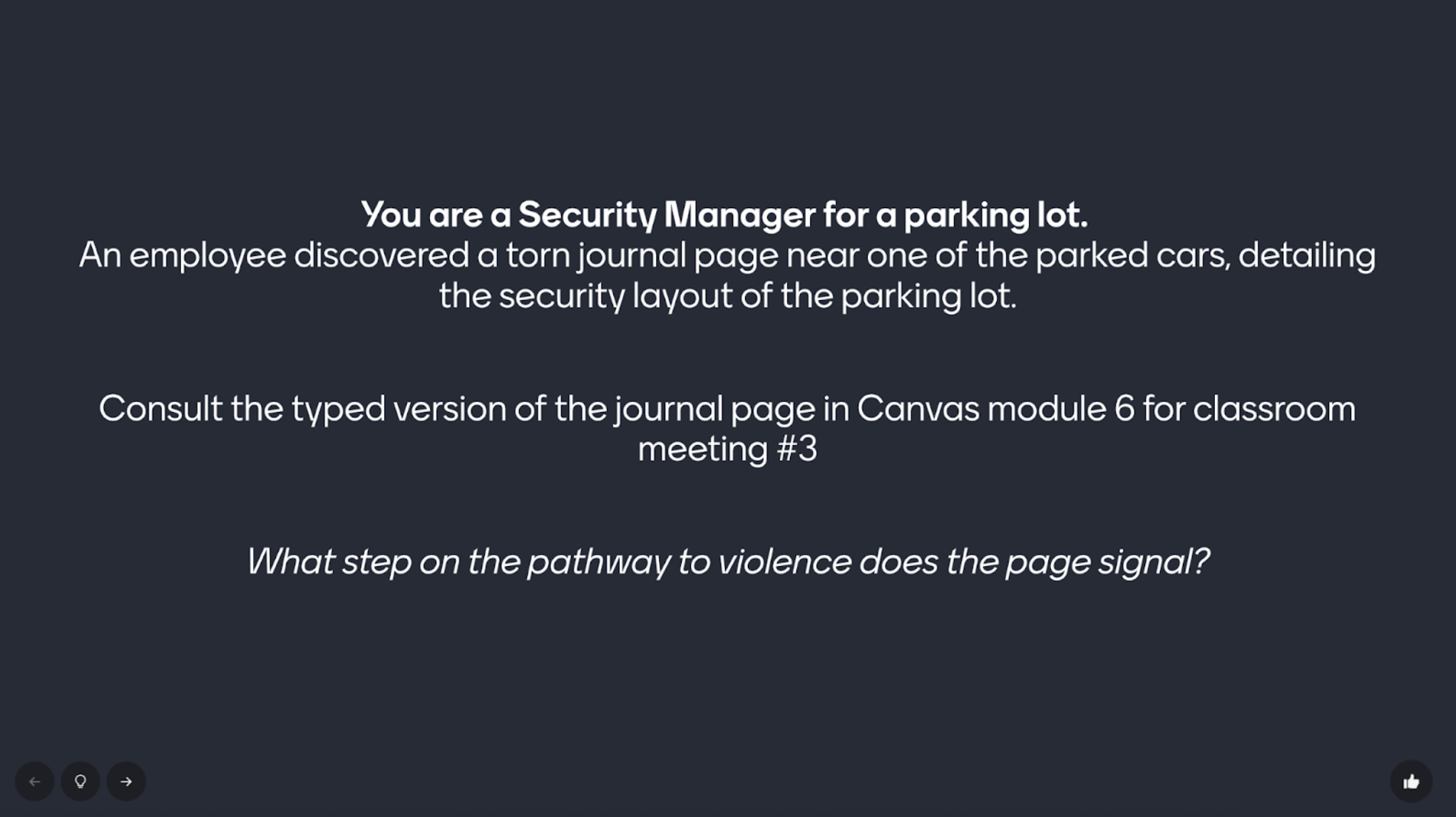
Instruções para uma atividade "você é" em sala de aula.
Esse tipo de pensamento aplicado ajuda os alunos a irem além da teoria. "Mesmo que não tenham visto exatamente aquele cenário antes, eles recorrem a tudo o que abordamos e usam isso em um novo contexto", diz ela.
Embora a atividade ainda aconteça em sala de aula, Georgia a vê como uma ponte poderosa entre o conteúdo acadêmico e a aplicação no mundo real. "É o mais próximo que conseguimos chegar da prática sem sair da sala de aula."
A abordagem de Georgia tem raízes na teoria da aprendizagem social, especificamente no trabalho de Albert Bandura. Seu modelo é simples e eficaz: modelar, dramatizar, dar feedback e depois generalizar.
"A forma como eu ensino é baseada na teoria da aprendizagem social de Bandura. Primeiro você modela, depois faz os alunos dramatizarem, dá a eles feedback sobre o desempenho e, então, vem o treinamento de generalização."
Ela começa modelando um comportamento ou processo de pensamento ela mesma. Depois, os alunos se revezam encenando diferentes respostas a um determinado cenário. "Em uma sessão, eles não veem só a minha versão. Veem até nove outras formas de abordar a mesma situação", diz Georgia.
Isso expõe os alunos a uma ampla gama de estilos de comunicação, estratégias de resolução de problemas e interpretações. Essa abordagem os prepara não só para memorizar, mas para se adaptar e responder de forma criativa.
Ao inverter sua sala de aula, gamificar o engajamento e enraizar seu ensino na teoria da aprendizagem social, Georgia criou um ambiente em que os alunos não só absorvem conhecimento — eles discutem e aplicam. "Às vezes passamos 20 minutos em uma única pergunta", diz Georgia. "E a clareza nessas conversas? Muito melhor do que uma aula expositiva."
Ela viu uma mudança clara na dinâmica da sala de aula e no desenvolvimento de habilidades para o mercado de trabalho.
"Antes, talvez 10% dos alunos mostrassem habilidades de liderança. Agora são 50%. Os alunos se manifestam, lideram discussões e explicam seu raciocínio. É incrível. Essas são as habilidades de que vão precisar no mercado de trabalho."
O Mentimeter também ajuda a apoiar os alunos introvertidos. Por meio de reflexões e enquetes anônimas, eles conseguem contribuir de formas que parecem seguras. "Nem todo mundo mostra o aprendizado da mesma maneira. Mas os resultados? Eles aparecem."
"Nossas atividades em sala de aula e o trivia do Mentimeter ajudam os alunos a aplicar o que aprenderam. Eles conhecem muito bem o conteúdo. As notas médias das provas subiram em relação aos semestres anteriores."
Para professores curiosos sobre como começar, o conselho de Georgia é simples:
"Comece pequeno. Você não precisa reformular tudo. Basta transformar uma aula em uma atividade em equipe. Assim que você ver o engajamento, o aprendizado, o entusiasmo — vai querer fazer mais."
A mudança exige esforço. Mas, como ela diz, "É menos trabalho no longo prazo e muito mais útil para os alunos. O esforço vale muito a pena."
"Com o Mentimeter, consigo reforçar o que os alunos aprenderam em casa. Vamos mais fundo no assunto por meio de interação, jogos e discussão. É sobre como eles aprendem, não só o que aprendem."
Georgia também usa o que chama de perguntas "você é" — estímulos baseados em cenários que pedem aos alunos que assumam papéis do mundo real e apliquem seu conhecimento em contexto. Essas perguntas começam com uma situação, exemplificada abaixo.
Instruções para uma atividade "você é" em sala de aula.
Esse tipo de pensamento aplicado ajuda os alunos a irem além da teoria. "Mesmo que não tenham visto exatamente aquele cenário antes, eles recorrem a tudo o que abordamos e usam isso em um novo contexto", diz ela.
Embora a atividade ainda aconteça em sala de aula, Georgia a vê como uma ponte poderosa entre o conteúdo acadêmico e a aplicação no mundo real. "É o mais próximo que conseguimos chegar da prática sem sair da sala de aula."
A abordagem de Georgia tem raízes na teoria da aprendizagem social, especificamente no trabalho de Albert Bandura. Seu modelo é simples e eficaz: modelar, dramatizar, dar feedback e depois generalizar.
"A forma como eu ensino é baseada na teoria da aprendizagem social de Bandura. Primeiro você modela, depois faz os alunos dramatizarem, dá a eles feedback sobre o desempenho e, então, vem o treinamento de generalização."
Ela começa modelando um comportamento ou processo de pensamento ela mesma. Depois, os alunos se revezam encenando diferentes respostas a um determinado cenário. "Em uma sessão, eles não veem só a minha versão. Veem até nove outras formas de abordar a mesma situação", diz Georgia.
Isso expõe os alunos a uma ampla gama de estilos de comunicação, estratégias de resolução de problemas e interpretações. Essa abordagem os prepara não só para memorizar, mas para se adaptar e responder de forma criativa.
Ao inverter sua sala de aula, gamificar o engajamento e enraizar seu ensino na teoria da aprendizagem social, Georgia criou um ambiente em que os alunos não só absorvem conhecimento — eles discutem e aplicam. "Às vezes passamos 20 minutos em uma única pergunta", diz Georgia. "E a clareza nessas conversas? Muito melhor do que uma aula expositiva."
Ela viu uma mudança clara na dinâmica da sala de aula e no desenvolvimento de habilidades para o mercado de trabalho.
"Antes, talvez 10% dos alunos mostrassem habilidades de liderança. Agora são 50%. Os alunos se manifestam, lideram discussões e explicam seu raciocínio. É incrível. Essas são as habilidades de que vão precisar no mercado de trabalho."
O Mentimeter também ajuda a apoiar os alunos introvertidos. Por meio de reflexões e enquetes anônimas, eles conseguem contribuir de formas que parecem seguras. "Nem todo mundo mostra o aprendizado da mesma maneira. Mas os resultados? Eles aparecem."
"Nossas atividades em sala de aula e o trivia do Mentimeter ajudam os alunos a aplicar o que aprenderam. Eles conhecem muito bem o conteúdo. As notas médias das provas subiram em relação aos semestres anteriores."
Para professores curiosos sobre como começar, o conselho de Georgia é simples:
"Comece pequeno. Você não precisa reformular tudo. Basta transformar uma aula em uma atividade em equipe. Assim que você ver o engajamento, o aprendizado, o entusiasmo — vai querer fazer mais."
A mudança exige esforço. Mas, como ela diz, "É menos trabalho no longo prazo e muito mais útil para os alunos. O esforço vale muito a pena."
"Com o Mentimeter, consigo reforçar o que os alunos aprenderam em casa. Vamos mais fundo no assunto por meio de interação, jogos e discussão. É sobre como eles aprendem, não só o que aprendem."
Georgia Spiropoulos é professora associada de Justiça Criminal na California State University, Fullerton. Ela ensina com convicção, profunda empatia por seus alunos e um entendimento apurado de como o aprendizado realmente acontece. O que começou com alguns ajustes se tornou uma reinvenção completa de como o conhecimento é compartilhado, discutido e absorvido.
As primeiras aulas de Georgia seguiam um padrão familiar: "Era o estilo antigo, o 'sábio no palco'. Focado em aula expositiva com algumas perguntas e respostas, mas, no geral, muito passivo e unilateral."
Mesmo assim, ela sabia que algo estava errado. "Eu aprendia mais sozinha, por meio da interação — não só com pessoas, mas com o próprio conteúdo. Eu precisava praticar. Era assim que eu aprendia melhor." Mas, por anos, ela ensinou do jeito que havia sido ensinada, presumindo que era assim que funcionava.
Por volta de 2015, essa suposição começou a se desfazer. "Não gosto desse estilo. Funciona para alguns alunos, mas não para outros. Especialmente aqui em Fullerton, nossos alunos são tão diversos. Então por que não misturar as coisas?"
Então veio a pandemia. "Tivemos sorte. A universidade realmente investiu em EdTech. Foi quando comecei a usar o Mentimeter em minhas aulas."
Georgia agora descreve seu ensino como "invertido e híbrido". Os alunos fazem as leituras e assistem aos vídeos por conta própria. E o tempo de aula? É aí que a verdadeira mágica acontece.
Usando o Mentimeter, ela conduz o que chama de jogos "estilo trivia de bar". Os alunos enviam os nomes de suas equipes por meio de slides de Formulário Rápido e depois mergulham em perguntas de quiz que reforçam os conceitos-chave.
"Antes do Mentimeter, o trivia em grupo era uma bagunça logística. Contar pontos e acompanhar era demais. Agora é tranquilo."
Georgia estrutura seus quizzes usando a taxonomia de Bloom — desde a memorização básica até o pensamento de ordem superior. "Começamos com a memorização, mas tento chegar a 'avaliar' e 'analisar'. É aí que acontece o aprendizado profundo."
Para ir mais fundo, Georgia combina perguntas de múltipla escolha com perguntas abertas de acompanhamento. Primeiro, os alunos verificam sua compreensão. Depois, explicam seu raciocínio.
"O porquê do pensamento do aluno é tão importante quanto o quê. É isso que eu realmente quero incentivar."
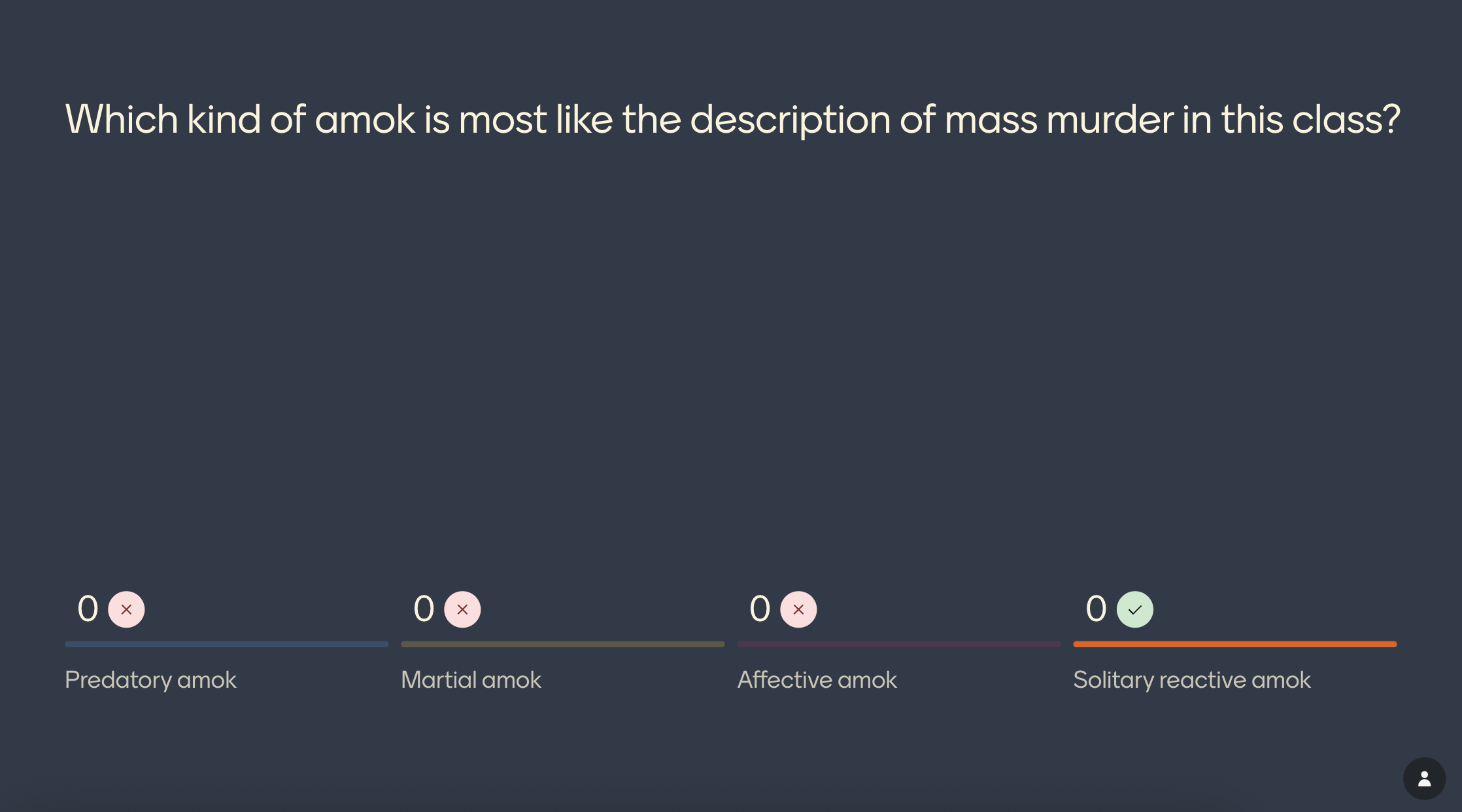
Uma pergunta de múltipla escolha para avaliar a compreensão dos alunos sobre o conceito principal.
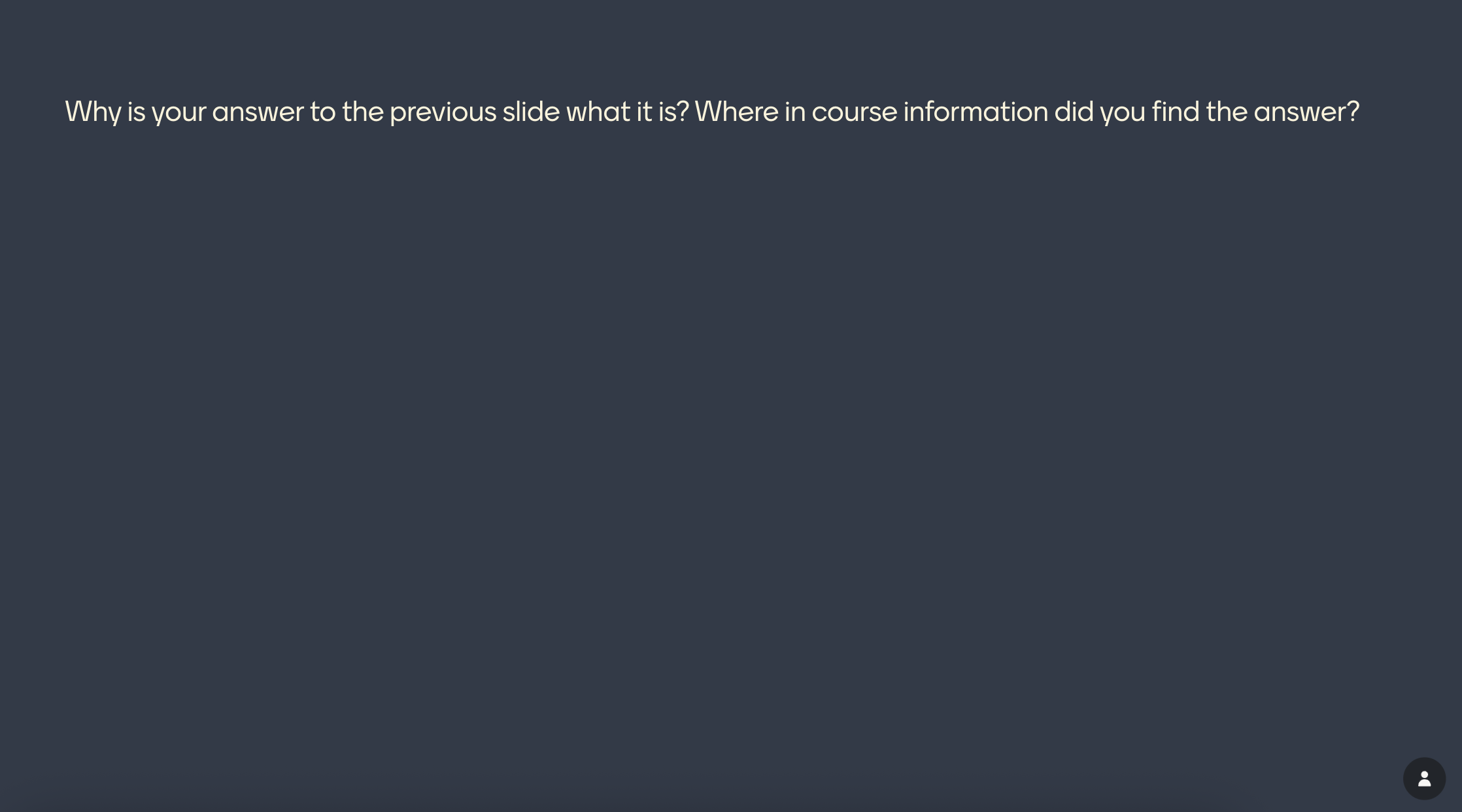
Uma pergunta aberta para obter uma visão mais profunda do pensamento e do processo de aprendizagem dos alunos.
Georgia Spiropoulos é professora associada de Justiça Criminal na California State University, Fullerton. Ela ensina com convicção, profunda empatia por seus alunos e um entendimento apurado de como o aprendizado realmente acontece. O que começou com alguns ajustes se tornou uma reinvenção completa de como o conhecimento é compartilhado, discutido e absorvido.
As primeiras aulas de Georgia seguiam um padrão familiar: "Era o estilo antigo, o 'sábio no palco'. Focado em aula expositiva com algumas perguntas e respostas, mas, no geral, muito passivo e unilateral."
Mesmo assim, ela sabia que algo estava errado. "Eu aprendia mais sozinha, por meio da interação — não só com pessoas, mas com o próprio conteúdo. Eu precisava praticar. Era assim que eu aprendia melhor." Mas, por anos, ela ensinou do jeito que havia sido ensinada, presumindo que era assim que funcionava.
Por volta de 2015, essa suposição começou a se desfazer. "Não gosto desse estilo. Funciona para alguns alunos, mas não para outros. Especialmente aqui em Fullerton, nossos alunos são tão diversos. Então por que não misturar as coisas?"
Então veio a pandemia. "Tivemos sorte. A universidade realmente investiu em EdTech. Foi quando comecei a usar o Mentimeter em minhas aulas."
Georgia agora descreve seu ensino como "invertido e híbrido". Os alunos fazem as leituras e assistem aos vídeos por conta própria. E o tempo de aula? É aí que a verdadeira mágica acontece.
Usando o Mentimeter, ela conduz o que chama de jogos "estilo trivia de bar". Os alunos enviam os nomes de suas equipes por meio de slides de Formulário Rápido e depois mergulham em perguntas de quiz que reforçam os conceitos-chave.
"Antes do Mentimeter, o trivia em grupo era uma bagunça logística. Contar pontos e acompanhar era demais. Agora é tranquilo."
Georgia estrutura seus quizzes usando a taxonomia de Bloom — desde a memorização básica até o pensamento de ordem superior. "Começamos com a memorização, mas tento chegar a 'avaliar' e 'analisar'. É aí que acontece o aprendizado profundo."
Para ir mais fundo, Georgia combina perguntas de múltipla escolha com perguntas abertas de acompanhamento. Primeiro, os alunos verificam sua compreensão. Depois, explicam seu raciocínio.
"O porquê do pensamento do aluno é tão importante quanto o quê. É isso que eu realmente quero incentivar."
Uma pergunta de múltipla escolha para avaliar a compreensão dos alunos sobre o conceito principal.
Uma pergunta aberta para obter uma visão mais profunda do pensamento e do processo de aprendizagem dos alunos.