Doubling feedback rate and increasing training participant satisfaction rating


Mentimeter ha sido fundamental para permitirnos impartir la formación y que los participantes la aprovecharan al máximo.

Mentimeter ha sido fundamental para permitirnos impartir la formación y que los participantes la aprovecharan al máximo.
"To justify the use and cost of Mentimeter, we had to know that it was making a difference. The Customer Success team helped us identify success metrics impacted by Mentimeter that we can measure, captured all the data, and put it all together beautifully - it was a real collaboration from the beginning."
- Shevaun Mullender, Head of Clinical Quality Improvement Capability
In their planning sessions with the Customer Success team after becoming a customer, MSEFT (NHS) decided to focus on two metrics best signaling Mentimeter's impact on the QSIR training program:
Average number of survey participants (supplemented by survey response rate in %)
Participant satisfaction rating (as the average of three metrics - relevance, session delivery, and pace)
The metrics have been captured for five training cohorts, where the first cohort acts as the baseline where Mentimeter was not yet introduced.
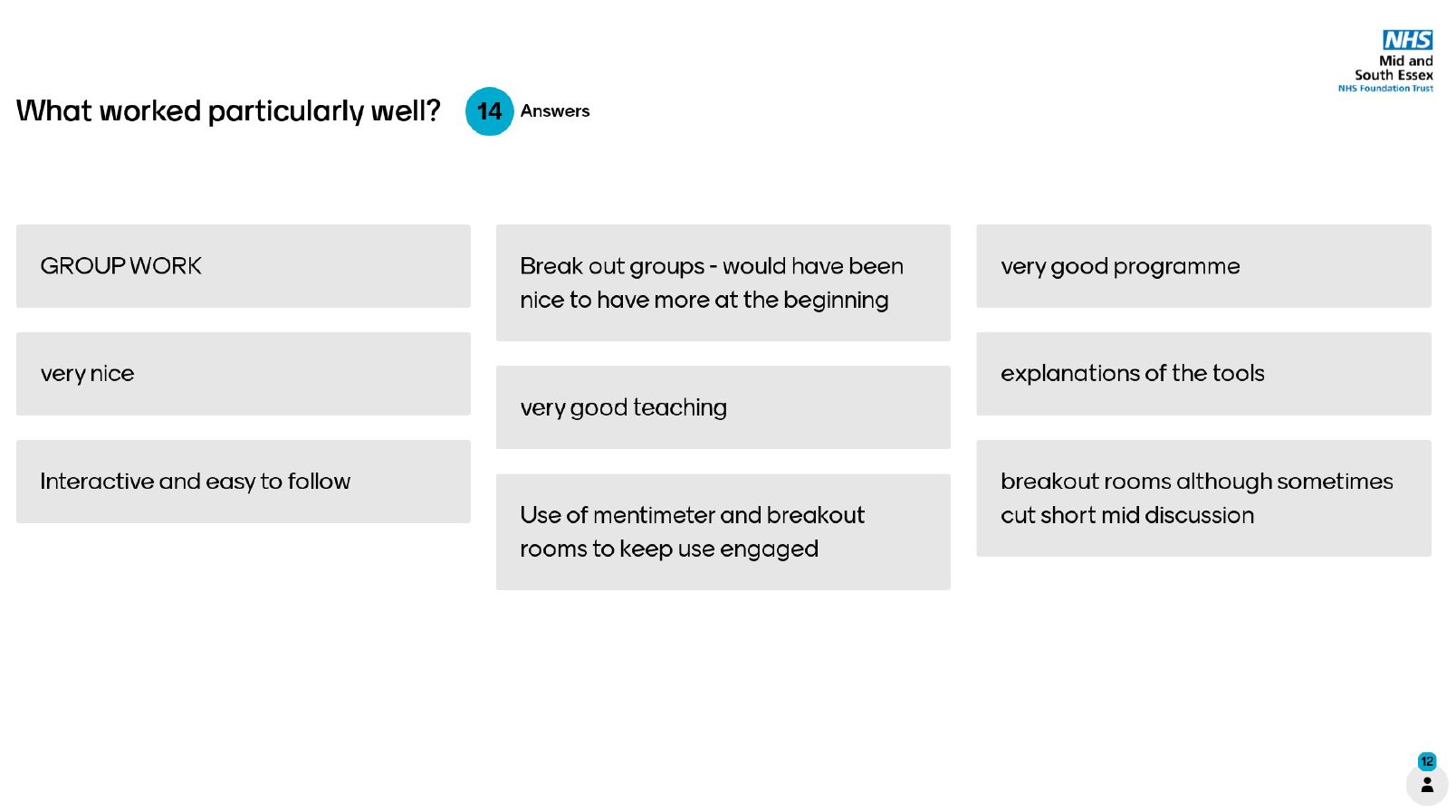
Right away, MSEFT (NHS) and the Customer Success team identified an impactful opportunity - collecting training session feedback in a live setting instead of linking the feedback survey in the follow-up email. This way "the participants can give feedback while it’s still fresh in their mind."

Feedback survey slide of the Quality, Service Improvement and Redesign program in Mid and South Essex NHS Foundation Trust
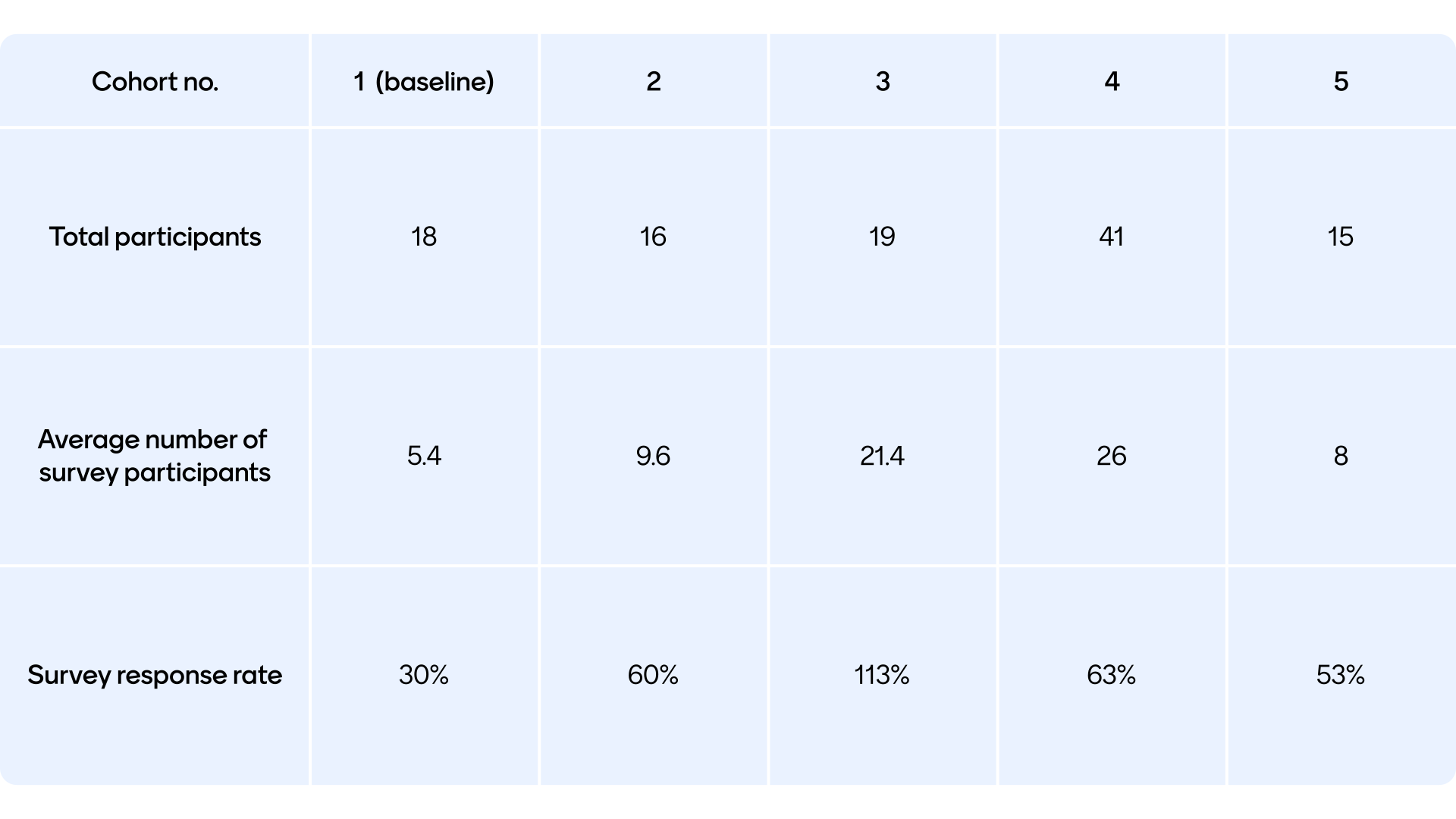
The impact of this change was immediate as the feedback survey response rate doubled, increasing from 30% to 60%. Since MSEFT (NHS) implemented Mentimeter and started collecting feedback live, the response rate has averaged about 60% for each cohort.
Overview of Quality, Service Improvement and Redesign (QSIR) program cohorts and their respective participation metrics
The increase in the average number of survey participants has given the team more feedback, allowing them to evaluate and implement various changes.
"People liked the quiz we did at the end of day one, so we looked at implementing it more. Not just at the end of the day, but also the beginning, to see if people remember the content and information from the previous day."
- Tino Mupembe, QI Engagement Manager & ICM Officer
As one of the trainers in QSIR, Samantha reflects that "Mentimeter has been instrumental in enabling us to deliver the training and for participants to get the most out of it." She and the other QSIR trainers have used it not just for the feedback surveys, but also for running check-ins, capturing activity reflections, doing skill-level self-assessments, and more.
"As a trainer, I feel better when I know that participants are listening and that my message is getting across. If it wasn't for Mentimeter, I wouldn't have the confidence that I have captured the audience."
- Samantha Rokoszynski, Improvement and Change Management Specialist
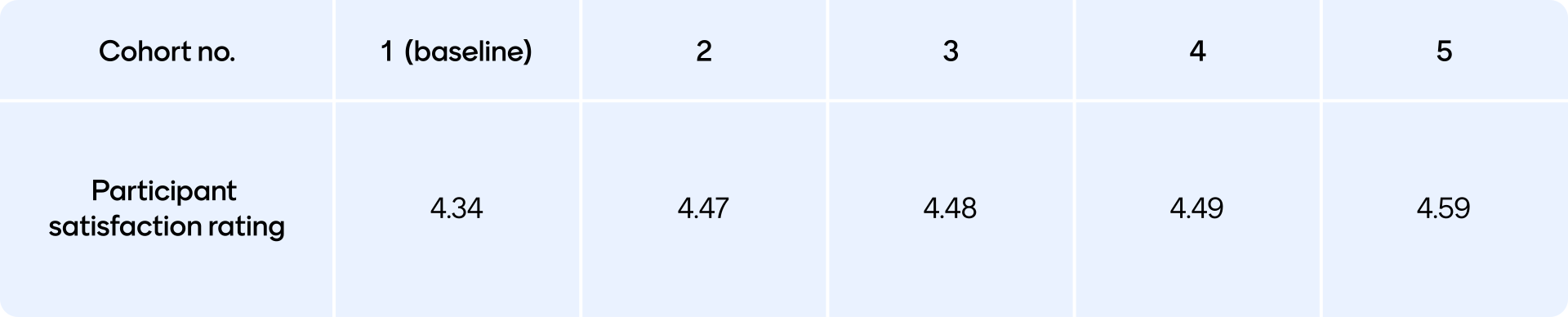
As the sessions became more engaging, more participants gave their feedback, and MSEFT (NHS) implemented various changes, the participant satisfaction rating steadily increased over time. When compared to the baseline, the participant satisfaction rating increased by 6%, from an already high 4.34 to 4.59 - talk about improvement!
Overview of participant satisfaction rating increase in the Quality, Service Improvement and Redesign (QSIR) program
"The success metric data we have collected shows the real-time impact of Mentimeter on our training program, which proves our point for a business case."
- Shevaun Mullender, Head of Clinical Quality Improvement Capability
Even though MSEFT (NHS) initially introduced Mentimeter for the QSIR training program, the use of Mentimeter has spread throughout the organization. Today, Mentimeter is used in various daily routines, including morning huddles, team check-ins, and various staff meetings.
"We use Mentimeter in any project and setting where we have to do some qualitative capture of data - it is really helpful."
- Shevaun Mullender, Head of Clinical Quality Improvement Capability

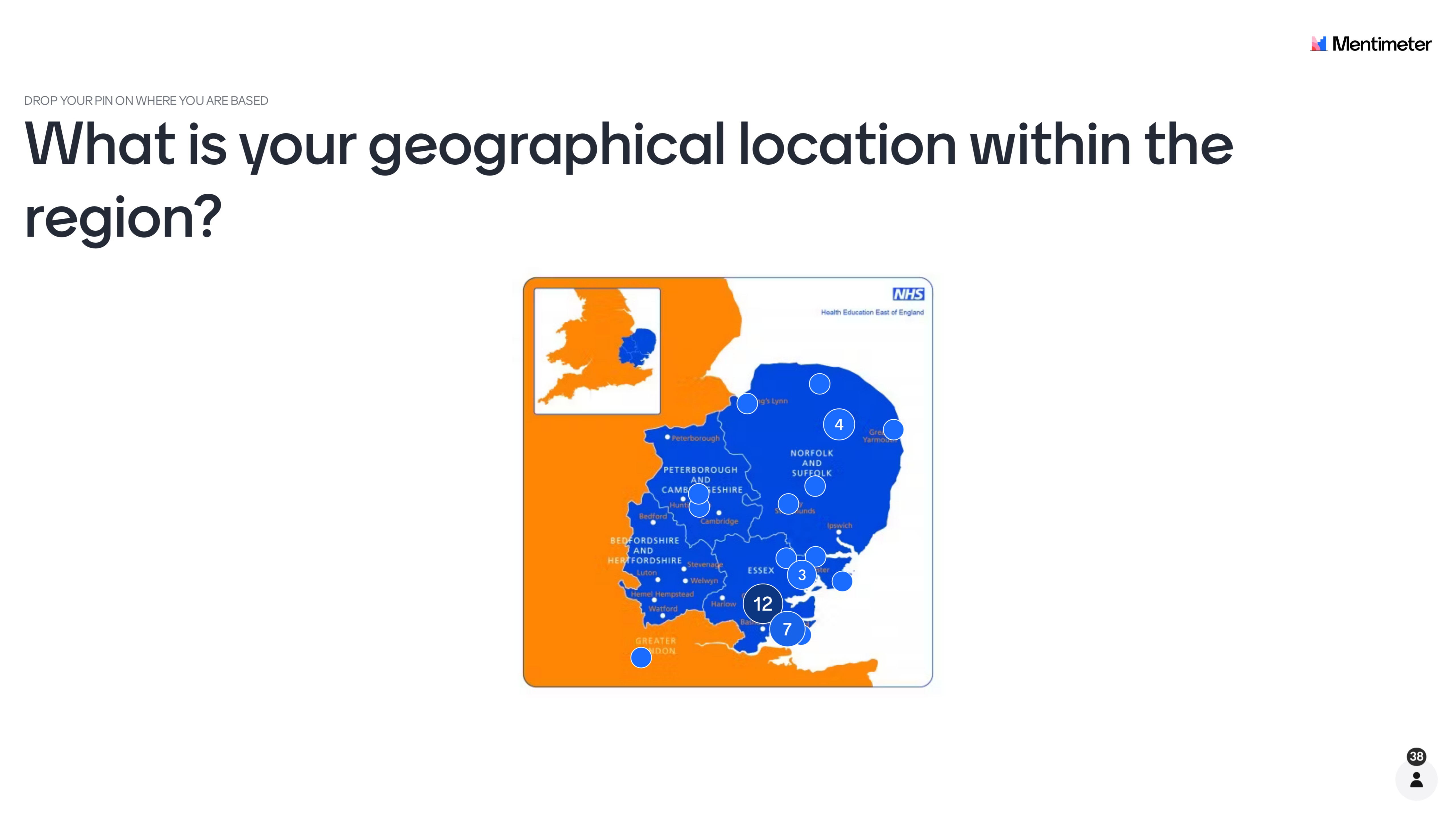
Pin on image from East of England Improvement Network Meeting in Mid and South Essex NHS Foundation Trust
Not only does Mentimeter help the staff of MSEFT (NHS) create fun and relatedness in their meetings, it also lets them efficiently collect feedback, beautifully visualize data, easily share insights with others, and analyze data to make continuous improvements.
"When it came to renewing the contract, it was a no-brainer because we're using Mentimeter so much now."
- Shevaun Mullender, Head of Clinical Quality Improvement Capability
"To justify the use and cost of Mentimeter, we had to know that it was making a difference. The Customer Success team helped us identify success metrics impacted by Mentimeter that we can measure, captured all the data, and put it all together beautifully - it was a real collaboration from the beginning."
- Shevaun Mullender, Head of Clinical Quality Improvement Capability
In their planning sessions with the Customer Success team after becoming a customer, MSEFT (NHS) decided to focus on two metrics best signaling Mentimeter's impact on the QSIR training program:
Average number of survey participants (supplemented by survey response rate in %)
Participant satisfaction rating (as the average of three metrics - relevance, session delivery, and pace)
The metrics have been captured for five training cohorts, where the first cohort acts as the baseline where Mentimeter was not yet introduced.
Right away, MSEFT (NHS) and the Customer Success team identified an impactful opportunity - collecting training session feedback in a live setting instead of linking the feedback survey in the follow-up email. This way "the participants can give feedback while it’s still fresh in their mind."

Feedback survey slide of the Quality, Service Improvement and Redesign program in Mid and South Essex NHS Foundation Trust
The impact of this change was immediate as the feedback survey response rate doubled, increasing from 30% to 60%. Since MSEFT (NHS) implemented Mentimeter and started collecting feedback live, the response rate has averaged about 60% for each cohort.
Overview of Quality, Service Improvement and Redesign (QSIR) program cohorts and their respective participation metrics
The increase in the average number of survey participants has given the team more feedback, allowing them to evaluate and implement various changes.
"People liked the quiz we did at the end of day one, so we looked at implementing it more. Not just at the end of the day, but also the beginning, to see if people remember the content and information from the previous day."
- Tino Mupembe, QI Engagement Manager & ICM Officer
As one of the trainers in QSIR, Samantha reflects that "Mentimeter has been instrumental in enabling us to deliver the training and for participants to get the most out of it." She and the other QSIR trainers have used it not just for the feedback surveys, but also for running check-ins, capturing activity reflections, doing skill-level self-assessments, and more.
"As a trainer, I feel better when I know that participants are listening and that my message is getting across. If it wasn't for Mentimeter, I wouldn't have the confidence that I have captured the audience."
- Samantha Rokoszynski, Improvement and Change Management Specialist
As the sessions became more engaging, more participants gave their feedback, and MSEFT (NHS) implemented various changes, the participant satisfaction rating steadily increased over time. When compared to the baseline, the participant satisfaction rating increased by 6%, from an already high 4.34 to 4.59 - talk about improvement!
Overview of participant satisfaction rating increase in the Quality, Service Improvement and Redesign (QSIR) program
"The success metric data we have collected shows the real-time impact of Mentimeter on our training program, which proves our point for a business case."
- Shevaun Mullender, Head of Clinical Quality Improvement Capability
Even though MSEFT (NHS) initially introduced Mentimeter for the QSIR training program, the use of Mentimeter has spread throughout the organization. Today, Mentimeter is used in various daily routines, including morning huddles, team check-ins, and various staff meetings.
"We use Mentimeter in any project and setting where we have to do some qualitative capture of data - it is really helpful."
- Shevaun Mullender, Head of Clinical Quality Improvement Capability

Pin on image from East of England Improvement Network Meeting in Mid and South Essex NHS Foundation Trust
Not only does Mentimeter help the staff of MSEFT (NHS) create fun and relatedness in their meetings, it also lets them efficiently collect feedback, beautifully visualize data, easily share insights with others, and analyze data to make continuous improvements.
"When it came to renewing the contract, it was a no-brainer because we're using Mentimeter so much now."
- Shevaun Mullender, Head of Clinical Quality Improvement Capability

El Mid and South Essex NHS Foundation Trust (MSEFT) es un proveedor de servicios sanitarios y uno de los mayores empleadores del Reino Unido. Tuvimos el placer de hablar con Shevaun Mullender, Head of Clinical Quality Improvement Capability, Tino Mupembe, QI Engagement Manager & ICM Officer, y Samantha Rokoszynski, Improvement and Change Management Specialist, para profundizar en su trayectoria y su éxito con Mentimeter.
El personal de MSEFT (NHS) es apasionado con su trabajo y con mejorar la calidad del mismo. En lugar de que un determinado equipo lleve a cabo procesos de mejora de calidad para el personal, MSEFT (NHS) capacita al personal para emprender ellos mismos proyectos de mejora de calidad. Para apoyar esta misión, ofrecen un programa de Quality, Service Improvement and Redesign (QSIR).
Cuando la pandemia de COVID se extendió en 2020, las sesiones de formación de MSEFT (NHS) pasaron a ser virtuales. Con este cambio, el profesorado del programa QSIR empezó a notar una falta de compromiso por parte de los participantes.
«Es difícil garantizar que más de 30 personas en una llamada estén concentradas, escuchando y aprendiendo. Se volvió importante para nosotros explorar cómo mejorar la participación en nuestras sesiones de formación».
- Shevaun Mullender, Head of Clinical Quality Improvement Capability

A medida que disminuía la participación general, también lo hacía la tasa de respuesta de la encuesta de feedback del programa QSIR.
«La falta de feedback significa falta de cambios y falta de adaptación a lo que necesita nuestro personal, lo cual era frustrante».
- Tino Mupembe, QI Engagement Manager & ICM Officer
Shevaun lidera el trabajo de introducir al equipo de MSEFT (NHS) en las prácticas de mejora de calidad y empezó a explorar Mentimeter como solución para aumentar la participación y la tasa de respuesta de la encuesta de feedback en las sesiones de formación QSIR.
MSEFT (NHS) finalmente decidió adquirir Mentimeter, encontrando valor en las siguientes funciones:
Respuestas anónimas que permiten a las personas hablar libremente sin miedo a represalias
Elementos interactivos que mantienen el interés de las personas durante más tiempo y aumentan la finalización de la encuesta
Visualización de datos atractiva y en tiempo real
Posibilidad de establecer una plantilla con la marca de la empresa
Accesibilidad y facilidad de uso
El Mid and South Essex NHS Foundation Trust (MSEFT) es un proveedor de servicios sanitarios y uno de los mayores empleadores del Reino Unido. Tuvimos el placer de hablar con Shevaun Mullender, Head of Clinical Quality Improvement Capability, Tino Mupembe, QI Engagement Manager & ICM Officer, y Samantha Rokoszynski, Improvement and Change Management Specialist, para profundizar en su trayectoria y su éxito con Mentimeter.
El personal de MSEFT (NHS) es apasionado con su trabajo y con mejorar la calidad del mismo. En lugar de que un determinado equipo lleve a cabo procesos de mejora de calidad para el personal, MSEFT (NHS) capacita al personal para emprender ellos mismos proyectos de mejora de calidad. Para apoyar esta misión, ofrecen un programa de Quality, Service Improvement and Redesign (QSIR).
Cuando la pandemia de COVID se extendió en 2020, las sesiones de formación de MSEFT (NHS) pasaron a ser virtuales. Con este cambio, el profesorado del programa QSIR empezó a notar una falta de compromiso por parte de los participantes.
«Es difícil garantizar que más de 30 personas en una llamada estén concentradas, escuchando y aprendiendo. Se volvió importante para nosotros explorar cómo mejorar la participación en nuestras sesiones de formación».
- Shevaun Mullender, Head of Clinical Quality Improvement Capability
A medida que disminuía la participación general, también lo hacía la tasa de respuesta de la encuesta de feedback del programa QSIR.
«La falta de feedback significa falta de cambios y falta de adaptación a lo que necesita nuestro personal, lo cual era frustrante».
- Tino Mupembe, QI Engagement Manager & ICM Officer
Shevaun lidera el trabajo de introducir al equipo de MSEFT (NHS) en las prácticas de mejora de calidad y empezó a explorar Mentimeter como solución para aumentar la participación y la tasa de respuesta de la encuesta de feedback en las sesiones de formación QSIR.
MSEFT (NHS) finalmente decidió adquirir Mentimeter, encontrando valor en las siguientes funciones:
Respuestas anónimas que permiten a las personas hablar libremente sin miedo a represalias
Elementos interactivos que mantienen el interés de las personas durante más tiempo y aumentan la finalización de la encuesta
Visualización de datos atractiva y en tiempo real
Posibilidad de establecer una plantilla con la marca de la empresa
Accesibilidad y facilidad de uso