Doubling feedback rate and increasing training participant satisfaction rating


Mentimeter war entscheidend dafür, dass wir das Training durchführen konnten und die Teilnehmenden das Meiste daraus mitnehmen konnten.

Mentimeter war entscheidend dafür, dass wir das Training durchführen konnten und die Teilnehmenden das Meiste daraus mitnehmen konnten.
Der Mid and South Essex NHS Foundation Trust (MSEFT) ist ein Anbieter von Gesundheitsdienstleistungen und einer der größten Arbeitgeber im Vereinigten Königreich. Wir hatten das Vergnügen, mit Shevaun Mullender, Head of Clinical Quality Improvement Capability, Tino Mupembe, QI Engagement Manager & ICM Officer, und Samantha Rokoszynski, Improvement and Change Management Specialist, zu sprechen, um einen tiefen Einblick in ihre Reise und ihren Erfolg mit Mentimeter zu bekommen.
Die Mitarbeitenden von MSEFT (NHS) setzen sich mit Leidenschaft für ihre Arbeit und deren Qualitätsverbesserung ein. Statt dass ein bestimmtes Team Qualitätsverbesserungsprozesse für die Mitarbeitenden durchführt, befähigt MSEFT (NHS) die Mitarbeitenden, Qualitätsverbesserungsprojekte selbst durchzuführen. Zur Unterstützung dieser Mission bieten sie ein Quality, Service Improvement and Redesign (QSIR)-Programm an.
Als sich die COVID-Pandemie 2020 ausbreitete, wurden die Schulungssitzungen von MSEFT (NHS) virtuell. Mit diesem Wandel begann das QSIR-Programmpersonal, einen Mangel an Engagement bei den Teilnehmenden festzustellen.
„Es ist schwierig sicherzustellen, dass sich 30+ Personen in einem Call konzentrieren, zuhören und lernen. Es wurde für uns wichtig, zu untersuchen, wie wir das Engagement in unseren Schulungssitzungen verbessern können.“
- Shevaun Mullender, Head of Clinical Quality Improvement Capability
Mit dem sinkenden Gesamtengagement sank auch die Rücklaufquote der Feedback-Umfrage für das QSIR-Programm.
„Fehlendes Feedback bedeutet fehlende Änderungen und fehlende Anpassung an das, was unsere Mitarbeitenden brauchen, was frustrierend war.“
- Tino Mupembe, QI Engagement Manager & ICM Officer
Shevaun leitet die Arbeit, das MSEFT (NHS)-Team mit Qualitätsverbesserungspraktiken vertraut zu machen, und begann, Mentimeter als Lösung zur Steigerung des Engagements und der Rücklaufquote der Feedback-Umfrage in den QSIR-Schulungssitzungen zu untersuchen.
MSEFT (NHS) entschied sich letztlich für den Kauf von Mentimeter und sah einen Mehrwert in folgenden Funktionen:
Anonyme Antworten, die es Menschen ermöglichen, frei zu sprechen, ohne Konsequenzen befürchten zu müssen
Interaktive Elemente, die das Interesse der Menschen länger aufrechterhalten und die Umfrage-Abschlussquote erhöhen
Ansprechende Datenvisualisierung in Echtzeit
Möglichkeit, eine unternehmensspezifische Vorlage einzurichten
Zugänglichkeit und einfache Bedienung
Der Mid and South Essex NHS Foundation Trust (MSEFT) ist ein Anbieter von Gesundheitsdienstleistungen und einer der größten Arbeitgeber im Vereinigten Königreich. Wir hatten das Vergnügen, mit Shevaun Mullender, Head of Clinical Quality Improvement Capability, Tino Mupembe, QI Engagement Manager & ICM Officer, und Samantha Rokoszynski, Improvement and Change Management Specialist, zu sprechen, um einen tiefen Einblick in ihre Reise und ihren Erfolg mit Mentimeter zu bekommen.
Die Mitarbeitenden von MSEFT (NHS) setzen sich mit Leidenschaft für ihre Arbeit und deren Qualitätsverbesserung ein. Statt dass ein bestimmtes Team Qualitätsverbesserungsprozesse für die Mitarbeitenden durchführt, befähigt MSEFT (NHS) die Mitarbeitenden, Qualitätsverbesserungsprojekte selbst durchzuführen. Zur Unterstützung dieser Mission bieten sie ein Quality, Service Improvement and Redesign (QSIR)-Programm an.
Als sich die COVID-Pandemie 2020 ausbreitete, wurden die Schulungssitzungen von MSEFT (NHS) virtuell. Mit diesem Wandel begann das QSIR-Programmpersonal, einen Mangel an Engagement bei den Teilnehmenden festzustellen.
„Es ist schwierig sicherzustellen, dass sich 30+ Personen in einem Call konzentrieren, zuhören und lernen. Es wurde für uns wichtig, zu untersuchen, wie wir das Engagement in unseren Schulungssitzungen verbessern können.“
- Shevaun Mullender, Head of Clinical Quality Improvement Capability
Mit dem sinkenden Gesamtengagement sank auch die Rücklaufquote der Feedback-Umfrage für das QSIR-Programm.
„Fehlendes Feedback bedeutet fehlende Änderungen und fehlende Anpassung an das, was unsere Mitarbeitenden brauchen, was frustrierend war.“
- Tino Mupembe, QI Engagement Manager & ICM Officer
Shevaun leitet die Arbeit, das MSEFT (NHS)-Team mit Qualitätsverbesserungspraktiken vertraut zu machen, und begann, Mentimeter als Lösung zur Steigerung des Engagements und der Rücklaufquote der Feedback-Umfrage in den QSIR-Schulungssitzungen zu untersuchen.
MSEFT (NHS) entschied sich letztlich für den Kauf von Mentimeter und sah einen Mehrwert in folgenden Funktionen:
Anonyme Antworten, die es Menschen ermöglichen, frei zu sprechen, ohne Konsequenzen befürchten zu müssen
Interaktive Elemente, die das Interesse der Menschen länger aufrechterhalten und die Umfrage-Abschlussquote erhöhen
Ansprechende Datenvisualisierung in Echtzeit
Möglichkeit, eine unternehmensspezifische Vorlage einzurichten
Zugänglichkeit und einfache Bedienung
"To justify the use and cost of Mentimeter, we had to know that it was making a difference. The Customer Success team helped us identify success metrics impacted by Mentimeter that we can measure, captured all the data, and put it all together beautifully - it was a real collaboration from the beginning."
- Shevaun Mullender, Head of Clinical Quality Improvement Capability
In their planning sessions with the Customer Success team after becoming a customer, MSEFT (NHS) decided to focus on two metrics best signaling Mentimeter's impact on the QSIR training program:
Average number of survey participants (supplemented by survey response rate in %)
Participant satisfaction rating (as the average of three metrics - relevance, session delivery, and pace)
The metrics have been captured for five training cohorts, where the first cohort acts as the baseline where Mentimeter was not yet introduced.
Right away, MSEFT (NHS) and the Customer Success team identified an impactful opportunity - collecting training session feedback in a live setting instead of linking the feedback survey in the follow-up email. This way "the participants can give feedback while it’s still fresh in their mind."

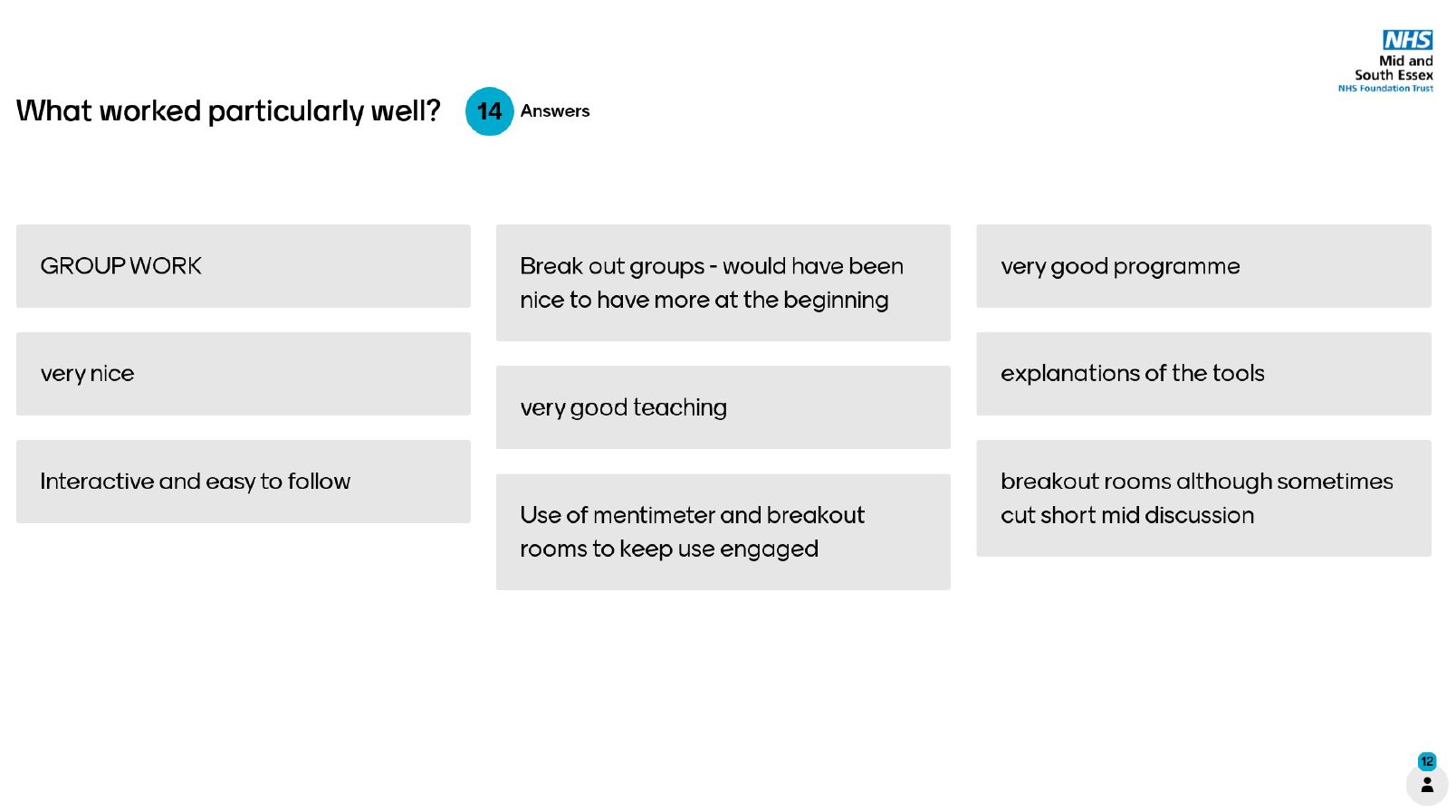
Feedback survey slide of the Quality, Service Improvement and Redesign program in Mid and South Essex NHS Foundation Trust
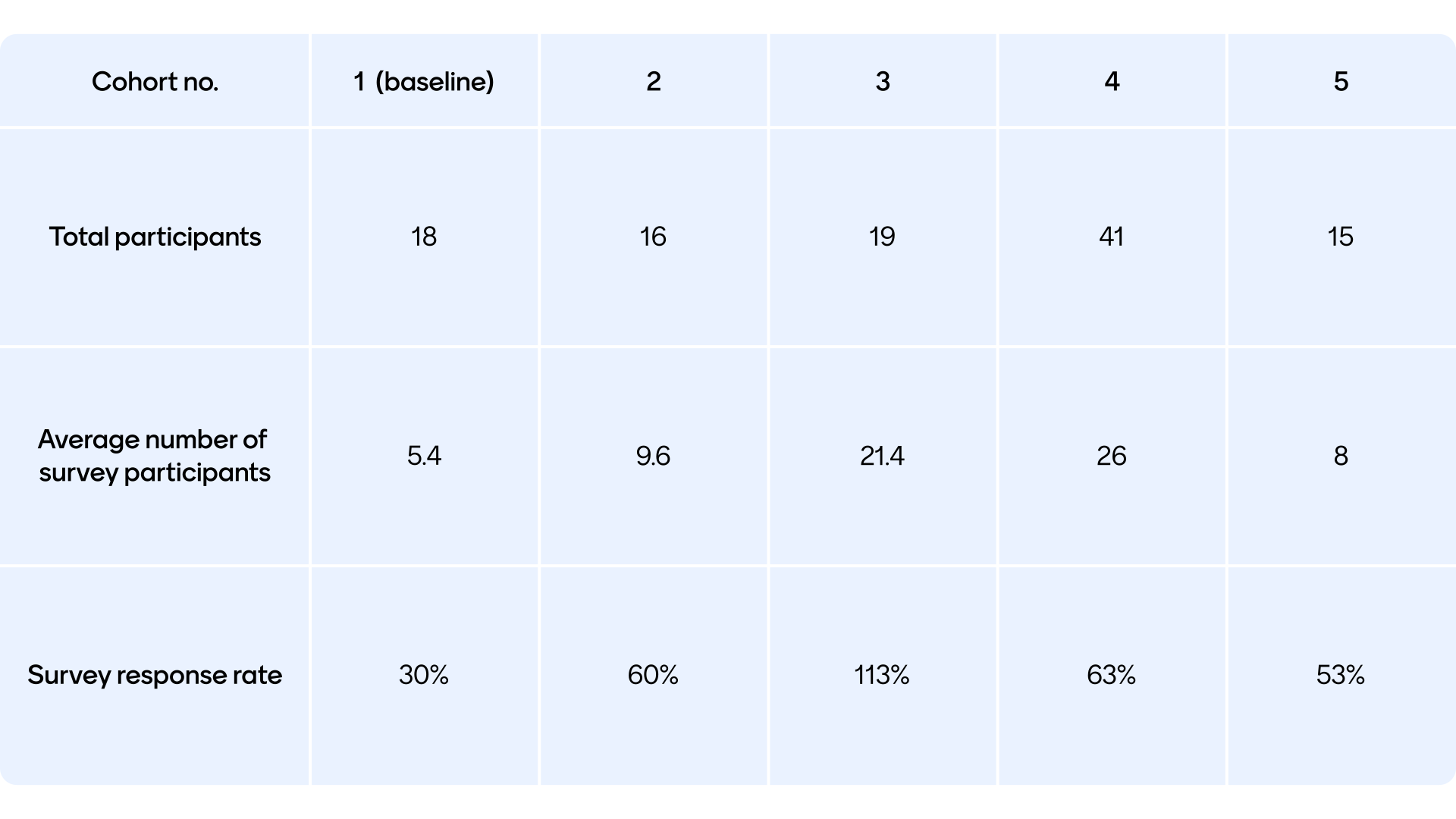
The impact of this change was immediate as the feedback survey response rate doubled, increasing from 30% to 60%. Since MSEFT (NHS) implemented Mentimeter and started collecting feedback live, the response rate has averaged about 60% for each cohort.
Overview of Quality, Service Improvement and Redesign (QSIR) program cohorts and their respective participation metrics
The increase in the average number of survey participants has given the team more feedback, allowing them to evaluate and implement various changes.
"People liked the quiz we did at the end of day one, so we looked at implementing it more. Not just at the end of the day, but also the beginning, to see if people remember the content and information from the previous day."
- Tino Mupembe, QI Engagement Manager & ICM Officer
As one of the trainers in QSIR, Samantha reflects that "Mentimeter has been instrumental in enabling us to deliver the training and for participants to get the most out of it." She and the other QSIR trainers have used it not just for the feedback surveys, but also for running check-ins, capturing activity reflections, doing skill-level self-assessments, and more.
"As a trainer, I feel better when I know that participants are listening and that my message is getting across. If it wasn't for Mentimeter, I wouldn't have the confidence that I have captured the audience."
- Samantha Rokoszynski, Improvement and Change Management Specialist
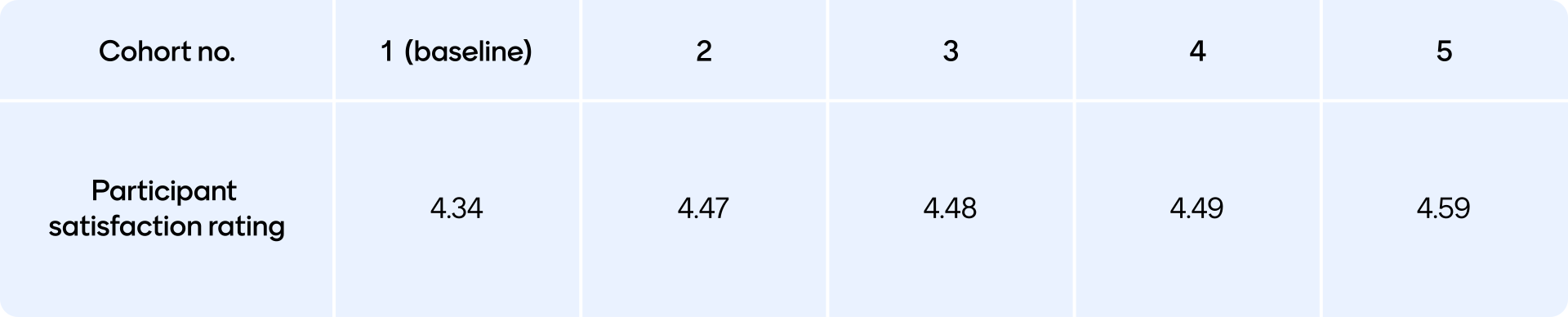
As the sessions became more engaging, more participants gave their feedback, and MSEFT (NHS) implemented various changes, the participant satisfaction rating steadily increased over time. When compared to the baseline, the participant satisfaction rating increased by 6%, from an already high 4.34 to 4.59 - talk about improvement!
Overview of participant satisfaction rating increase in the Quality, Service Improvement and Redesign (QSIR) program
"The success metric data we have collected shows the real-time impact of Mentimeter on our training program, which proves our point for a business case."
- Shevaun Mullender, Head of Clinical Quality Improvement Capability
Even though MSEFT (NHS) initially introduced Mentimeter for the QSIR training program, the use of Mentimeter has spread throughout the organization. Today, Mentimeter is used in various daily routines, including morning huddles, team check-ins, and various staff meetings.
"We use Mentimeter in any project and setting where we have to do some qualitative capture of data - it is really helpful."
- Shevaun Mullender, Head of Clinical Quality Improvement Capability

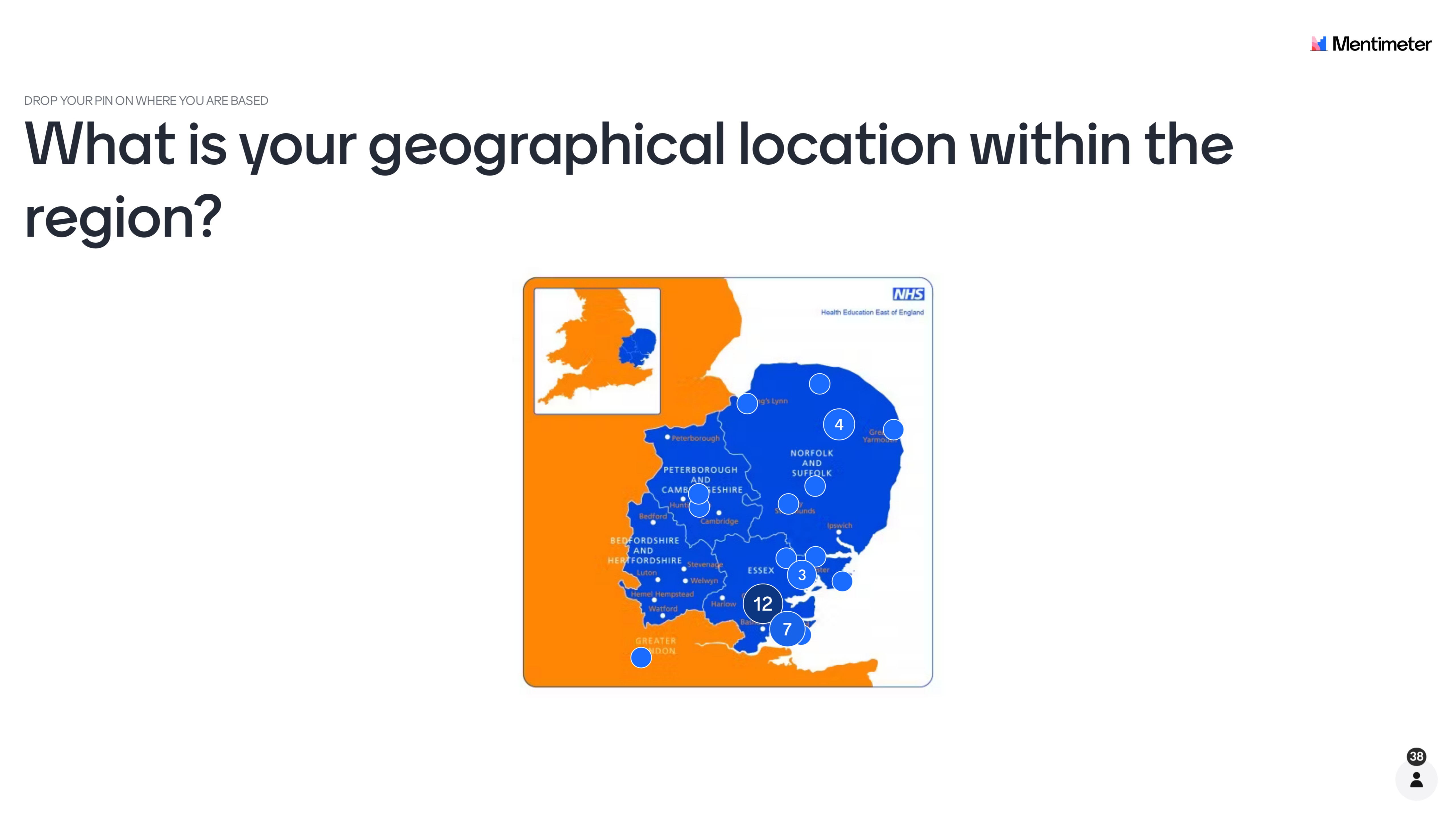
Pin on image from East of England Improvement Network Meeting in Mid and South Essex NHS Foundation Trust
Not only does Mentimeter help the staff of MSEFT (NHS) create fun and relatedness in their meetings, it also lets them efficiently collect feedback, beautifully visualize data, easily share insights with others, and analyze data to make continuous improvements.
"When it came to renewing the contract, it was a no-brainer because we're using Mentimeter so much now."
- Shevaun Mullender, Head of Clinical Quality Improvement Capability
"To justify the use and cost of Mentimeter, we had to know that it was making a difference. The Customer Success team helped us identify success metrics impacted by Mentimeter that we can measure, captured all the data, and put it all together beautifully - it was a real collaboration from the beginning."
- Shevaun Mullender, Head of Clinical Quality Improvement Capability

In their planning sessions with the Customer Success team after becoming a customer, MSEFT (NHS) decided to focus on two metrics best signaling Mentimeter's impact on the QSIR training program:
Average number of survey participants (supplemented by survey response rate in %)
Participant satisfaction rating (as the average of three metrics - relevance, session delivery, and pace)
The metrics have been captured for five training cohorts, where the first cohort acts as the baseline where Mentimeter was not yet introduced.
Right away, MSEFT (NHS) and the Customer Success team identified an impactful opportunity - collecting training session feedback in a live setting instead of linking the feedback survey in the follow-up email. This way "the participants can give feedback while it’s still fresh in their mind."

Feedback survey slide of the Quality, Service Improvement and Redesign program in Mid and South Essex NHS Foundation Trust
The impact of this change was immediate as the feedback survey response rate doubled, increasing from 30% to 60%. Since MSEFT (NHS) implemented Mentimeter and started collecting feedback live, the response rate has averaged about 60% for each cohort.
Overview of Quality, Service Improvement and Redesign (QSIR) program cohorts and their respective participation metrics
The increase in the average number of survey participants has given the team more feedback, allowing them to evaluate and implement various changes.
"People liked the quiz we did at the end of day one, so we looked at implementing it more. Not just at the end of the day, but also the beginning, to see if people remember the content and information from the previous day."
- Tino Mupembe, QI Engagement Manager & ICM Officer
As one of the trainers in QSIR, Samantha reflects that "Mentimeter has been instrumental in enabling us to deliver the training and for participants to get the most out of it." She and the other QSIR trainers have used it not just for the feedback surveys, but also for running check-ins, capturing activity reflections, doing skill-level self-assessments, and more.
"As a trainer, I feel better when I know that participants are listening and that my message is getting across. If it wasn't for Mentimeter, I wouldn't have the confidence that I have captured the audience."
- Samantha Rokoszynski, Improvement and Change Management Specialist
As the sessions became more engaging, more participants gave their feedback, and MSEFT (NHS) implemented various changes, the participant satisfaction rating steadily increased over time. When compared to the baseline, the participant satisfaction rating increased by 6%, from an already high 4.34 to 4.59 - talk about improvement!
Overview of participant satisfaction rating increase in the Quality, Service Improvement and Redesign (QSIR) program
"The success metric data we have collected shows the real-time impact of Mentimeter on our training program, which proves our point for a business case."
- Shevaun Mullender, Head of Clinical Quality Improvement Capability

Even though MSEFT (NHS) initially introduced Mentimeter for the QSIR training program, the use of Mentimeter has spread throughout the organization. Today, Mentimeter is used in various daily routines, including morning huddles, team check-ins, and various staff meetings.
"We use Mentimeter in any project and setting where we have to do some qualitative capture of data - it is really helpful."
- Shevaun Mullender, Head of Clinical Quality Improvement Capability
Pin on image from East of England Improvement Network Meeting in Mid and South Essex NHS Foundation Trust
Not only does Mentimeter help the staff of MSEFT (NHS) create fun and relatedness in their meetings, it also lets them efficiently collect feedback, beautifully visualize data, easily share insights with others, and analyze data to make continuous improvements.
"When it came to renewing the contract, it was a no-brainer because we're using Mentimeter so much now."
- Shevaun Mullender, Head of Clinical Quality Improvement Capability