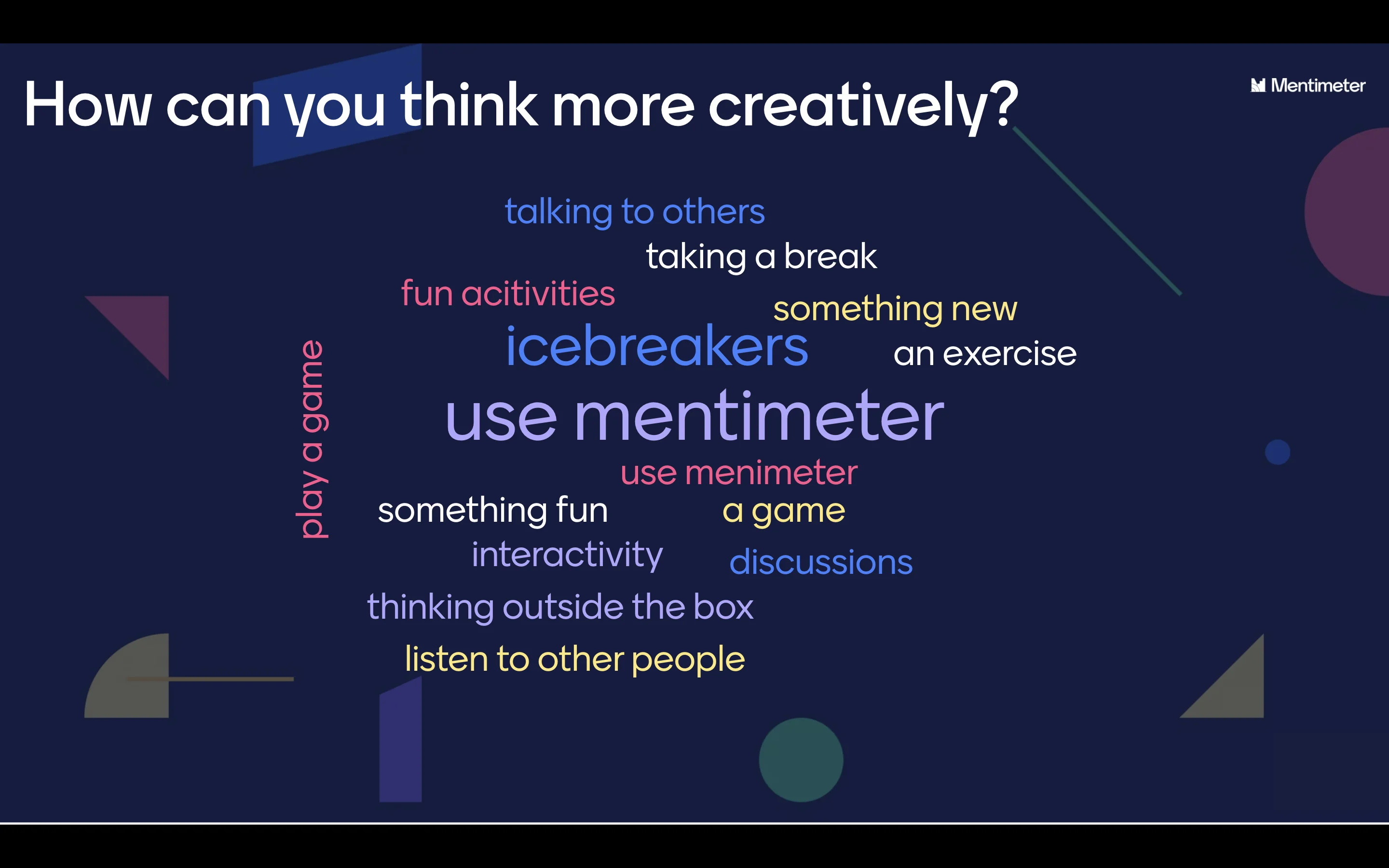

Getting those creative juices flowing isn’t always easy, especially in group settings or with new people. In many professional and school environments, we’re often stuck following strict rules and logical boundaries that can, unfortunately, kill off innovation before it even starts. If you want a group to really think outside the box, you need to intentionally shake things up and create a space where new ideas actually have room to grow.
Brainstorming is a fantastic way to pull disruptive and fresh ideas from every single person on your team. But the thing is, our brains usually need a bit of a warm-up before they’re ready to get truly creative. That’s where structured activities come in. By using ice breaker games, you can beat those mental blocks and get everyone ready for some high-level collaboration.
Table of Contents
- What are ice breaker games?
- How do you facilitate ice breaker games effectively?
- Why are ice breaker games essential for virtual meetings?
- How to use these icebreakers
- 80+ creative ice breaker games and prompts
- Start the creative thinking process with Mentimeter
- Frequently Asked Questions
What are ice breaker games?
Think of ice breaker games as the perfect way to lower social barriers, build rapport, and get a group ready to tackle a project or lesson together. These exercises are your best tool for building interpersonal connections and "psychological safety". Basically, making sure everyone feels comfortable enough to share their unique ideas without feeling judged.
While they’re often used just to get past that initial "first day" awkwardness, these games are much more than just simple get-to-know-you moments. They’re strategic tools that help align a group’s energy with the goals of your session. Whether you’re in a physical classroom or a digital workspace, the right activity can turn a passive audience into a lively community of thinkers.
How do you facilitate ice breaker games effectively?
Facilitation is really just the art of guiding a group through a process to get a specific result, all while keeping an eye on the energy in the room. To lead an ice breaker effectively, you need to set clear rules, keep things enthusiastic, and wrap it all up with a quick debrief that connects the fun back to the main agenda.
- Manage room logistics based on size: Smaller groups (under 10) can handle open-ended, verbal games where everyone gets a turn to speak, while larger crowds benefit from digital tools or breakout rooms to ensure everyone has a voice without the session dragging on.
- Watch the clock: Cap your ice breaker at roughly 10-15% of the total meeting time (so for example, about five to ten minutes for an hour-long session) to keep momentum high.
- Transition with purpose: Your job as a leader is to empower your audience, ensuring the jump from the ice break to the core work feels smooth and intentional.
Why are ice breaker games essential for virtual meetings?
Sometimes, virtual meetings can feel a bit disconnected. And without those organic water cooler chats, it’s hard for remote teams to build the trust they need for deep collaboration. Ice breakers are essential in digital spaces because they provide the structure needed to overcome the distance of a screen and get people talking.
In a remote or hybrid world, team building has to be a lot more intentional. Since you aren't bumping into each other in the office, structured ice breakers become the go-to way to foster a sense of togetherness. Using interactive tools like AI presentations can really help bridge the gap.
What's the difference between ice breaker games and ice breaker questions?
Think of ice breaker games as the high-energy, interactive side of things. They often involve some kind of movement, a bit of friendly competition, or maybe even collaborative problem-solving. On the other hand, icebreaker questions are low-friction prompts. They’re great for quick transitions or when you want to start a conversation without spending too much time on a full-blown game.
While questions are perfect for a quick pulse check, games are usually better for deep team building. Games force people to interact with each other’s ideas, whereas questions are often answered one by one. Which one you choose really just depends on how much time you have and how comfortable the group is with one another.
How to use these icebreakers
These icebreakers are designed to initiate conversation and spark curiosity. They’re not designed to be answered and left alone. Instead, the primary goal of a brainstorming session or a workshop is to get buy-in from everyone and make them feel involved. These icebreakers are the perfect way to initiate discussions from the get-go and promote a sense of creative thinking; two birds and one stone.
On the hunt for education-specific icebreakers?
80+ creative ice breaker games and prompts
1. Word Association
Time estimate: 5 minutes
How to play: Share a central word or theme and have everyone contribute the first related word that pops into their head.
Think of a particular topic and create a list of words related to it. Then, ask the audience what words come to mind when they think of this topic. A great tip is to use the Word Cloud feature on Mentimeter so that everyone can see people’s thoughts in real-time and on the big screen.
Word Association - Holiday
- What do you think of when you hear the word holiday?
- What word do you associate with
- Give me a synonym for
- Give me an antonym for
- What comes to mind when you read the word
- Provide a word related to
- List a word that goes well with
- Complete this sentence:
- Start this sentence:
- What word goes best with the following:
2. Round Table Story
Time estimate: 10-15 minutes
How to play: Start with a story prompt and let each person add one sentence to keep the narrative moving until you reach a conclusion.
This type of icebreaker can take many different forms which makes it a great way to use again and again. Don’t worry your group won’t need to write a full novel or even the plot of a short story. Encourage them to write one maybe two sentences. Let them come up with whatever strikes their fancy.
Round Table Story - The Cyclist
- The man was cycling when suddenly . . .
- . . . and then they strolled home.
- . . . but the funny thing was that . . .
- Somewhere far along this road . . .
- . . . when finally they came to the end of the path.
3. The Brick
Time estimate: 5-10 minutes
How to play: Pick a common object and challenge the group to think of as many weird, non-traditional uses for it as they can.
Have the group think of as many different and unusual uses for a standard red brick. Once the most obvious ideas have gone it will be fun to see some of the unusual ideas that people can come up with. Sometimes referred to as the paper clip game, this can be used with any product or thing. So feel free to reuse it when needed.
The Brick
- A brick
- Paper clip
- Spade
- Glass jar
- Yoga mat
4. Hammer or Nail
Time estimate: 5 minutes
How to play: Present two different objects and ask everyone to pick the one that best matches their current mood or personality.
This is a fun-go around the room activity. Choose two random objects or things, for example, a tree or the wind, and ask everyone to pick which one best describes them and why.
Hammer or Nail
- A Hammer or A Nail
- Fire or Water
- Paint or A Paintbrush
- Tree or The Wind
- Apple or Banana
- Fruit or Vegetable
- Music or Podcast
- Pen or Paper
- Train or Plane
- Sunshine or Snow
5. The Reverse Brainstorm
Time estimate: 10 minutes
How to play: Give the group a made-up brand name and let them decide what kind of business or product it represents.
This icebreaker will help to stimulate new creative paths. Create a list of made-up brand names and get participants to think of as many products or businesses that the name could stand for. Try and encourage people to be as descriptive and expressive as possible.
Reverse Brainstorm - Excelsior
- Excelsior
- Eureka
- Gran Fondo
- LogicallyCreative
- Italicized
6. Brainteasers
Time estimate: 5-10 minutes
How to play: Read a riddle to the group and give them a minute to figure out the logic behind the answer.
Love them or hate them, you cannot deny that brain-twisters and riddles are a great way to kick those critical and creative parts into overdrive. Some answers will require plenty of logic to solve while others demand some real outside-of-the-box thinking.
Timepiece Brainteaser
- A sundial has the fewest moving parts of any timepiece. Which has the most? Hourglass
- During which month of the year do we all sleep the least? February
- You have a candle, a wood stove, and a gas lamp with you in a dark room. You only have one match, so what do you light first? The match
- A man shaves several times a day but still has a long beard. How? He’s a barber
- Which tire doesn’t move when a car turns right? The spare
- In 1850, a woman is 15 years old. But in 1855, she was only 10 years old. How? She was born in 1865 B.C.
- What begins with the letter T is filled with T and ends with T? A teapot
- A cowboy arrives in town on Friday, stays for only 3 nights, and then leaves on Friday. How? His horse is named Friday.
- What can you hold without using your hands? Your breath
- I speak without a mouth and hear without ears. I have no body, but I come alive with the wind. What am I? An echo
7. Guessing Games
Time estimate: 5-10 minutes
How to play: Ask a trivia question and have everyone submit their best guess to see who is the most accurate.
So let’s take away the random elements of a kid's guessing game and bring some assumptions, hunches, and educated guesses to the table. What better way to stimulate creative thinking than encouraging your audience to logically think through everything and come to their own conclusions.
How many trees would it take to make 1 ton of paper?
- How many trees would it take to make 1 ton of paper? 24
- Which country has the most bicycles per capita? The Netherlands
- Which language has the most words? English
- What is the only mammal that cannot jump? The elephant
- How many countries in the world speak Spanish as a first language? Spanish
- What color is least popular in national flags? Purple - It’s only used in 2
- Which countries have won the most military battles? France
- Which European country is the most expensive to live in? Monaco
- How many countries are there in the world? 195
- What is the strongest muscle in the human body? The jaw
8. Rankings
Time estimate: 5 minutes
How to play: Provide a few options and ask the group to order them based on their personal priorities or tastes.
Rankings are a great way to get people thinking, prioritizing, weighing their options, and carefully considering their own preferences and views. All in all, rankings icebreakers can be a great way to kickstart those creative motors. For further discussion points, why not ask people why they chose their rankings?
What would you prioritize in a marketing campaign?
- What would you prioritize in a marketing campaign? Social Media, Paid Media, Organic/SEO traffic?
- Which animals do you think are the smartest? Cats, Dogs, Birds
- What day is the most enjoyable? Friday, Saturday, Sunday
- Which is you’re preferred way of working? In the office, Remotely, A bit of both
- Which streaming service do you favor? Netflix, Amazon Prime Video, HBO Max
9. This or That
Time estimate: 5 minutes
How to play: Present two choices and have the group pick their favorite in a quick-fire round.
This or That questions can be a great way to understand your group better but they can also be a way of sparking some creative thinking, especially if you ask some good inventive questions with some interesting choices.
Team Lead or Expert
- Team Lead or Expert
- Desk Job or Outside Job
- Present or Listen
- Dress up or Dress down
- Cash or Card
- 1 long holiday or Numerous small holidays
- Spend or Save
- Hot or Cold
- 9-5 or Flexi-time
- Coffee or Tea
10. Categorize
Time estimate: 5-10 minutes
How to play: Give the group a specific topic and ask them to name a certain number of items that fit that description.
This is a great way to get people thinking creatively and outside of the box. Simply give your audience a category and ask them to submit a few things related to it. You can also add in a competitive element by awarding points for unique answers!
Categorize - What Lives in the Forest?
- Name 5 things that live in the forest
- List 5 things that fly
- Think of 6 Italian cities
- Name 3 varieties of wine
- List 4 Ancient Greek or Roman Gods
- Name 5 car manufacturers
- Give me 4 British authors
- Name 4 sports played without a ball
- List 6 US States
- Give 4 types of pasta
Bonus Section - 100 points game thing
This is a game that is specific to Mentimeter (so it really is unique!. Not only will your audience be asked to really consider their available options, but they'll also have to consider just how much they may value something.
100 Points Lottery Icebreaker
Start the creative thinking process with Mentimeter
Try asking plenty of different questions and playing ice breaker games right at the beginning of your presentation to spark some really innovative and inventive ideas. Never be stuck for good ideas again and get your audience engaged and ready to go.
Frequently asked questions
What are some fun ice breaker games?
Some of the most fun games are things like "The Brick," where you imagine weird uses for everyday objects, or "Round Table Story," where everyone builds a narrative together. These work so well because they get people laughing and being creative, which naturally lowers those social barriers. Using a tool like Mentimeter makes it even better with real-time visual results and active participation.
How do you start an ice breaker?
To get started, just clearly explain why you're doing the activity and give simple instructions. It’s usually best to start with a "low-stakes" prompt so everyone feels comfortable before moving into anything more complex. As the facilitator, your energy really sets the tone. So lead by example and show them it’s a safe space to share!
What are three types of ice breakers?
Three main types you'll see are introductory, energizing, and functional. Introductions help people get to know each other, energizers are perfect for when the room needs a bit of a boost, and functional ice breakers are more strategic. They lead right into the main topic or problem you're there to solve.
What are good ice breakers for small groups?
For smaller groups, you can go a bit deeper with questions or collaborative tasks like "Reverse Brainstorming." Since it's a more intimate setting, you can ensure everyone gets a chance to speak and that no one person dominates. It’s the perfect environment for building real trust and psychological safety.
How do you break the ice in a virtual meeting?
Breaking the ice online works best when you use digital-first strategies, like Word Clouds or live polls. Since you don't have those physical cues you'd get in person, visual tools help create a shared sense of presence. Just keep them short and simple to avoid any tech-related delays that might kill the momentum!
Erstellen Sie Ihr erstes Menti kostenlos
Legen Sie los![360+ unterhaltsame Quizfragen rund um Allgemeinwissen [2026]](https://images.ctfassets.net/rvt0uslu5yqp/7fDPDXbVBGuX8Ai9V5U3qP/25d81ca5e0acd67a4376ca3166bb66d7/quiz-questions-hero.png?fm=webp&w=3840&q=75)