7 Steps to a More Engaging Town Hall Meeting
The traditional one-way lecture just doesn’t cut it anymore. To run an effective town hall meeting, you need a structured agenda that prioritizes transparency, interactive Q&A, and a digital-first approach for hybrid teams. By focusing on storytelling and real-time feedback, you can transform a standard corporate update into a powerful tool for building trust and alignment across your entire organization.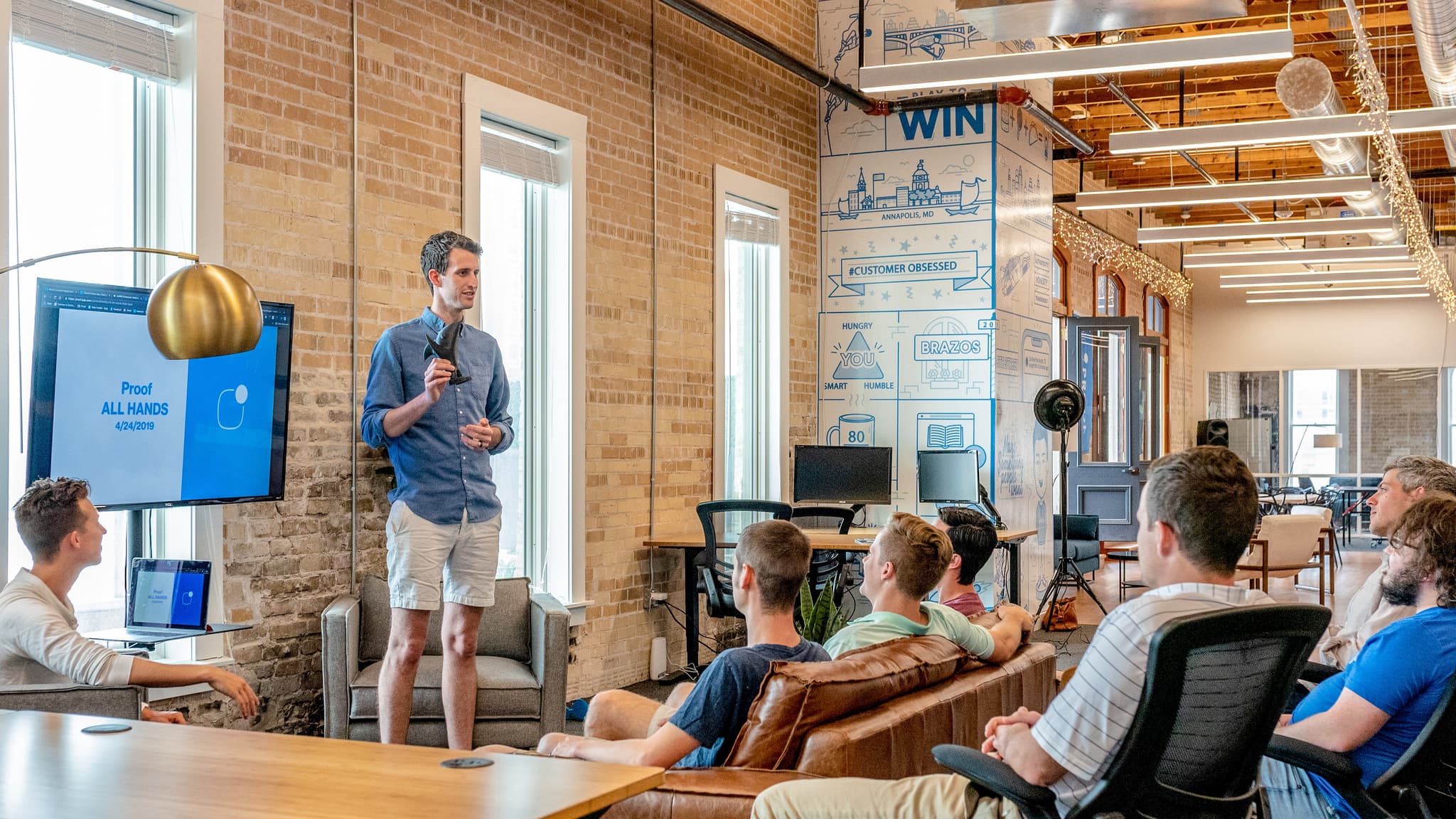
In this guide, you'll learn:
- What’s a town hall meeting?
- Why are town hall meetings so important?
- How do you run a hybrid town hall meeting?
- 7 steps to a more engaging town hall
- How to make all-hands meetings meaningful
What's a town hall meeting?
A town hall meeting, or all hands meeting, is a gathering where leaders share updates and everyone gets a chance to ask questions and share their thoughts. It’s a pillar of how we talk to each other at work, and it’s commonly designed to keep things transparent and make sure everyone feels like they have a seat at the table.
In a company setting, this is the time to zoom out. It’s where the “why” behind the “what” gets explained, and where the team gets to see the people behind the leadership titles. Unlike a quick team sync, a town hall is for everyone, whether you’re the person who started yesterday or the CEO.
Explore our interactive meeting tools
Why are town hall meetings so important?
Town halls and all-hands meetings are so valuable because they help close the gap between the executive office and the rest of the team. This gap is more critical than ever; according to Gallup's 2026 State of the Global Workplace report, global employee engagement has recently dipped to just 20%. However, organizations that prioritize consistent, transparent communication see engagement levels nearly four times the global average.
When we open up the floor, we move away from corporate announcements and toward a real dialogue. This can help build a sense of trust and belonging that you just can't get from an email.
When these meetings are done with care, they do a few wonderful things:
- Building trust: Being open about the highs and the lows shows that leadership values honesty.
- Finding your “why”: It helps everyone see how their hard work fits into the company’s bigger mission.
- Bringing people together: It’s one of those rare times the whole company is gathered, which helps break down walls between departments.
- Listening in real-time: Leaders get to hear what’s actually on people’s minds through live questions and chats.
Explore our town hall meeting agenda templates
How do you run a hybrid town hall meeting?
A hybrid town hall takes place digitally, and connects people in the office with those working remotely. To make this work, we have to think digital-first. This means making sure our remote friends have the exact same chance to ask questions, vote in polls, and feel the energy as the people sitting in the front row.
The biggest hurdle in hybrid meetings is the feeling of being left out. If the people in the room are laughing at a joke while the people on screen are just watching a silent video, the connection is immediately lost. Using an interactive tool like Mentimeter to create engagement can help bridge this gap through live polls, word clouds or Q&As.
Explore our hybrid meeting software
7 steps to a more engaging town hall meeting
Bring everyone into the conversation. Here are 7 ways to create a more engaging town hall meeting.
- Start with a clear “why”
- Stay curious and invite people in
- Keep the agenda friendly and focused
- Use visuals that tell a story
- Break the ice early
- Have a friendly guide
- Keep the conversation going
1. Start with a clear "why"
Before you send out the invite, think about what you want everyone to feel when the meeting ends. Are you celebrating a big win, or navigating a change? If you don’t have a clear purpose, your team will feel it. If an update works better as a quick read, try saving the meeting time for something more interactive.
2. Stay curious and invite people in
To get people truly engaged, we need to move past the lecture-style. Try to weave in moments where people can actually participate. Use a live poll to see how a new project is landing, or an interactive word cloud to capture the team’s mood. When you ask for input, it shows you’re ready to listen and learn.
3. Keep the agenda friendly and focused
A meeting that wanders too far off track can be a bit draining. A structured flow shows you respect everyone’s time.
Here’s a 60-minute flow you can try:
- Warm welcome and team meeting icebreakers (5 mins)
- The “Big Picture” story (15 mins)
- A shout-out to a specific team (10 mins)
- Use an interactive word cloud to deep dive into a new idea (10 mins)
- Open up feedback opportunities with an interactive Q&A (15 mins)
- Closing thoughts (5 mins)
4. Use visuals that tell a story
Try to move away from slides full of bullet points and lots of text. Instead, use simple visuals that help tell the story. Charts should be easy to read at a glance. Remember, your slides are there to support you, not to be the main event. If people are squinting at text, they might miss the passion in your voice.
5. Break the ice early
The first few minutes really set the mood. Use a quick icebreaker to help everyone feel comfortable speaking up. Whether it’s a silly trivia question or a simple “How’s everyone doing?” poll, getting that first interaction out of the way makes the Q&A feel much more natural later on. If you need some ideas, check out our icebreaker templates and examples.
Meeting Warm-Up
6. Have a friendly guide
Every great town hall needs a facilitator, someone to be the host. This doesn’t have to be the CEO. It’s someone who keeps the energy up, watches the clock, and makes sure the questions are being heard. They’re there to make sure even the quietest voices have a chance to shine, too.
7. Keep the conversation going
The connection shouldn't end when the “Leave Meeting” button is clicked. Send a friendly follow-up with a summary and the slides. Most importantly, if there were questions you couldn't get to, answer them in the follow-up. It shows that you really heard them and that their curiosity matters.
Create a meaningful town hall meeting with Mentimeter
Your next town hall meeting can be engaging, lively, and interactive with Mentimeter. Sign up for your free account today to get started.
Discover how Mentimeter can help every team in any situation
Explore our use cases!Frequently asked questions
What's the main purpose of a town hall meeting?
Town halls are all about creating a space for open conversation. The goal is to align everyone on where the company is going, share the news, and, most importantly, give everyone a chance to talk directly to leadership. It’s about building a community, not just a workplace.
What's the difference between an all hands and a town hall?
In most offices, all-hands and town hall mean the same thing! If you want to get technical, though, all-hands usually means everyone is required to be there to get on the same page. A town hall often feels a bit more focused on the Q&A and the back-and-forth conversation.
How do you handle difficult questions in a town hall?
The best way to handle difficult questions in a town hall is with honesty and a bit of vulnerability. If you don’t have the answer right away, that’s okay! Just acknowledge the question, explain why it’s important, and promise to get back to them by a certain date. Being real with people builds way more trust than a scripted answer.
What are some good topics for a town hall meeting?
Anything that touches the whole team are good topics for your next town hall! Think about sharing quarterly goals, celebrating big milestones, or introducing new faces. It’s also a great time to talk about the long-term vision. The best topics are the ones that make everyone feel like they’re part of the journey.
Create your first Menti for free
Get started

